Study Tour to Rwamagana Shows How Land Consolidation Helps Farmers Use Water More Efficiently
Farmers from Kirehe District have returned from a study tour in Rwamagana with a new understanding of how irrigation water can be managed more efficiently ,farmers working together to grow the same crop at the same time.
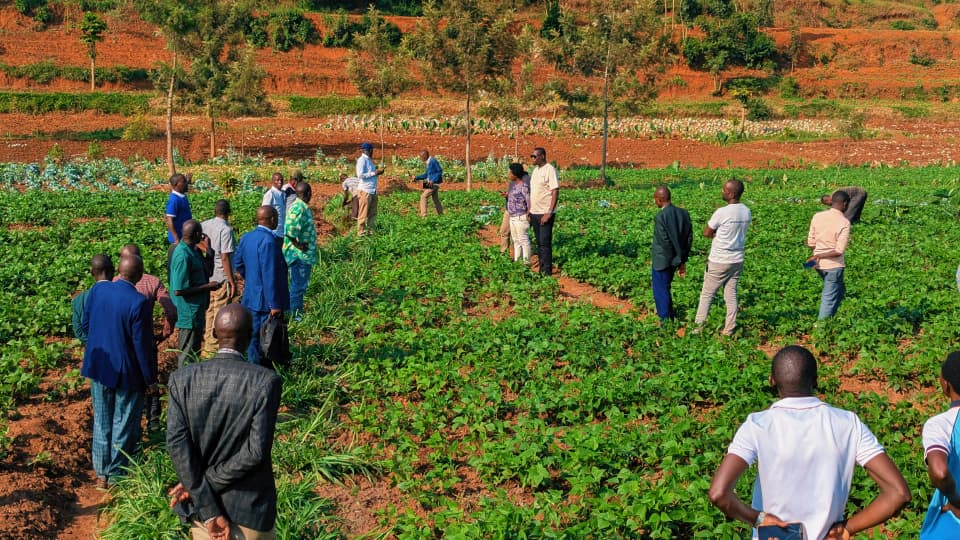
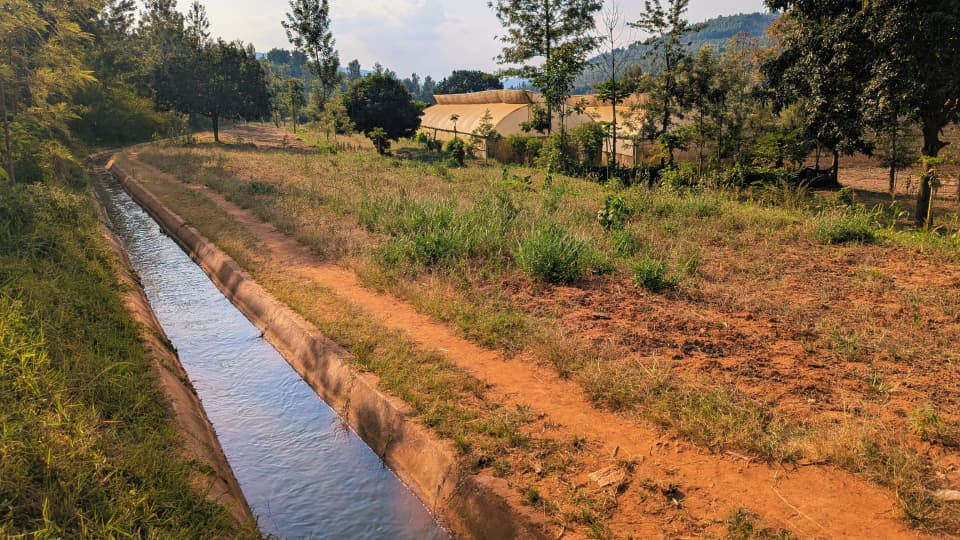
During a visit to the Cyaruhogo Irrigation Scheme in Rwamagana District, farmers learned that cultivating one crop across an entire irrigation scheme helps save water, improve irrigation management, increase yields and reduce conflicts among farmers.
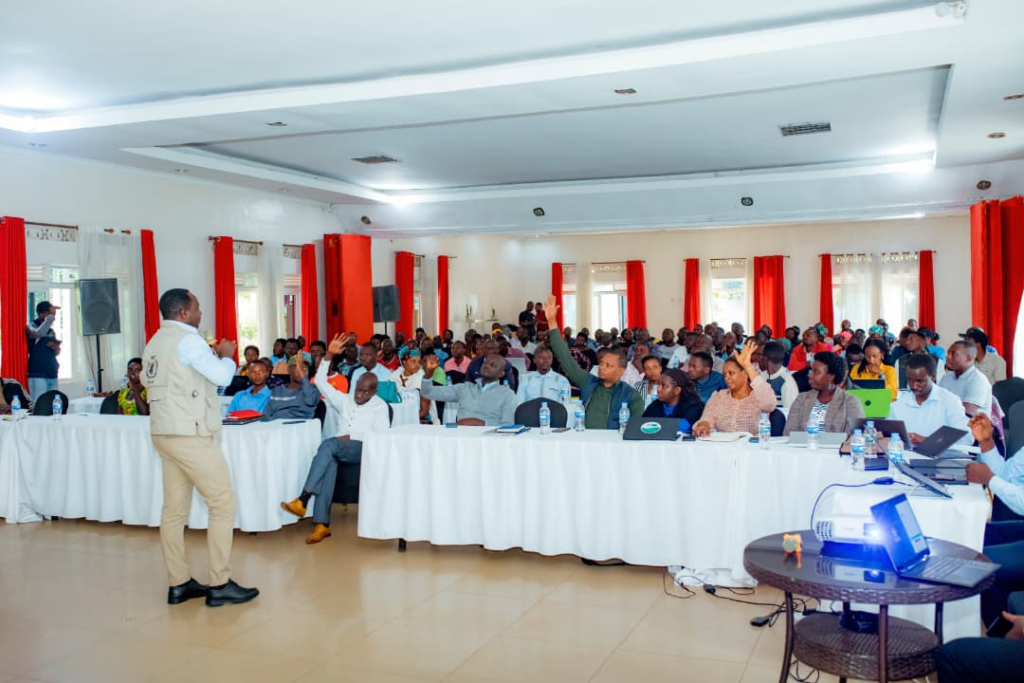
The visit was organized by the Rwanda Agriculture and Animal Resources Development Board (RAB) through the Sustainable Agricultural Intensification and Food Security Project (SAIP II), bringing together 58 participants from Kinoni I, Kinoni II and Nyamugari irrigation schemes in Kirehe District.
The three-day study tour strengthen farmers’ knowledge in irrigation water management, governance of Water User Associations, infrastructure maintenance, financial management, transparency, accountability and sustainable use of irrigation systems.
Why Growing One Crop Matters
At Cyaruhogo, farmers have adopted a system where members agree to grow the same crop during the same season. Large sections of the irrigation scheme are currently dedicated to beans, allowing all farmers to follow the same irrigation calendar and water management plan.
According to irrigation specialists, this approach makes water management easier because all farmers require similar amounts of water at the same time.
Farmers See the Benefits First-Hand
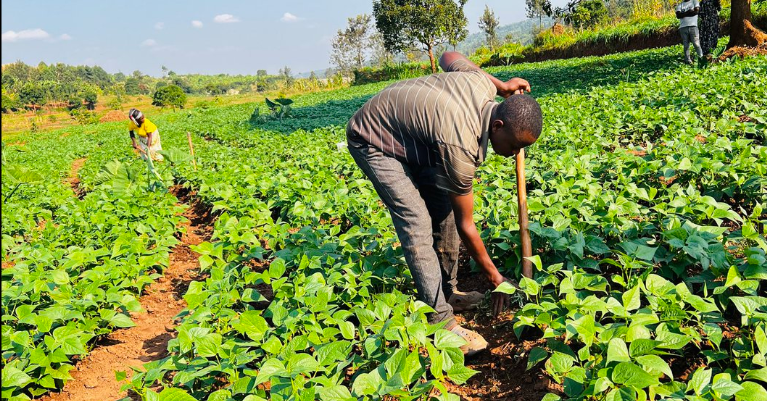
The study tour also gave participants the opportunity to meet successful farmers who have benefited from irrigation and modern farming practices.
One of them was Niyomugabo Eliezel, a farmer and member of the Gwiza Cooperative in Rwamagana District, whose story inspired many visitors.
Eliezel explained that he once worked as a motorcycle taxi operator before deciding to focus on agriculture as a business.
“In the past, I was not farming professionally. I used to work as a motorcycle taxi operator, but I discovered that agriculture offers better opportunities when it is done properly,” he said.
Today, he specializes in irrigated crop production and has become a model farmer and agricultural technician.
According to Eliezel, the support received through SAIP II, including training, study tours, improved seeds and technical guidance, transformed his farming activities.
“Before receiving training, I farmed without proper knowledge or planning. Productivity was low and income was small. Today, I understand modern farming techniques and irrigation management. On a small piece of land, I can invest about RWF 600,000 in one season and earn around RWF 1.6 million in return,” he explained.
Irrigation Works Better When Farmers Work Together
When farmers grow different crops within the same irrigation scheme, water demand becomes difficult to manage. Some crops require more water while others need less. As a result, some farmers use too much water while others receive insufficient amounts, leading to water shortages, lower productivity and frequent conflicts.
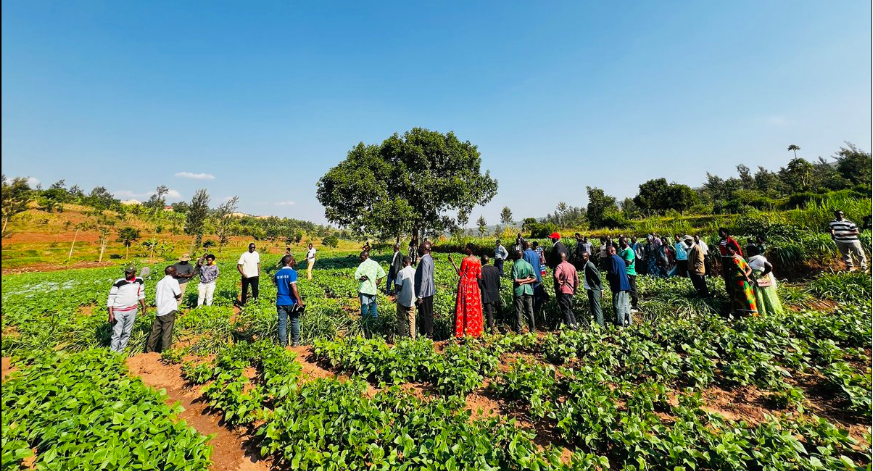
Officials say this challenge affects many irrigation schemes where farmers do not coordinate crop production.
Jules Mporana, Water Users Organization Specialist working under RAB and SAIP II, said poor water management is often caused by a lack of coordination among farmers rather than a shortage of water.
“Many people think irrigation is only about building dams and canals, but that is not true. Irrigation also requires planning, discipline and cooperation among farmers. When everyone grows different crops and uses water whenever they want, water is wasted and conflicts arise,” he said.
“When farmers agree to grow the same crop and follow the same irrigation calendar, it becomes easier to calculate crop water requirements, distribute water fairly and protect the irrigation infrastructure. This is one of the most important lessons we wanted participants to learn during this study tour.”
Mporana explained that irrigation schemes represent investments worth billions of francs and can only remain productive if farmers understand how to use water efficiently.
He noted that many complaints about water shortages are often linked to poor water management rather than a lack of water itself.
“Sometimes farmers believe a dam has run out of water, yet the real problem is that water has not been managed properly. Farmers need training on crop water requirements and irrigation schedules so that every drop of water is used wisely,” he said.
Lessons for Kirehe Farmers
For participants from Kirehe, the visit highlighted challenges they continue to face in their own irrigation schemes.
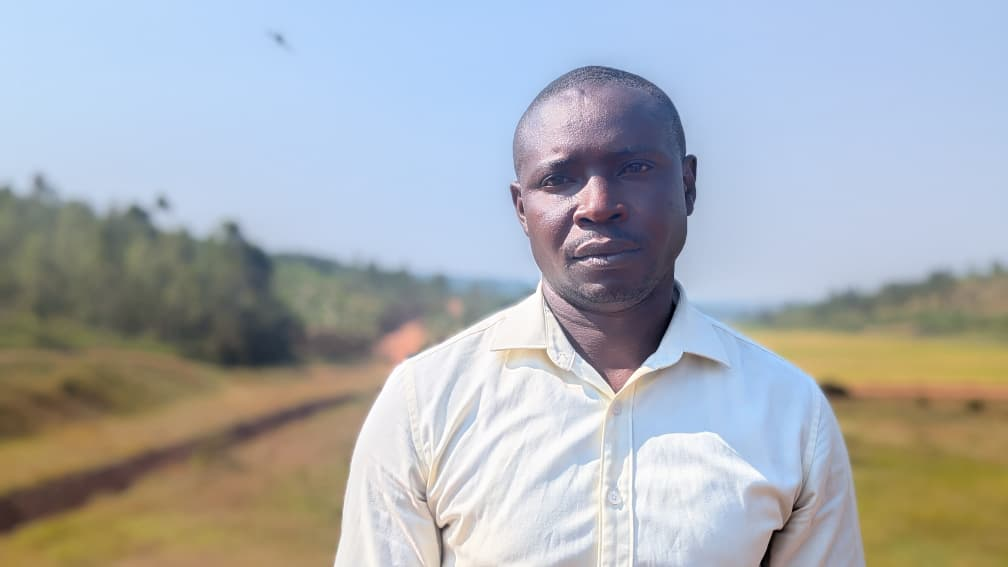
Twiringimana Samuel, President of the Water Users Association in Kinoni II Irrigation Scheme, said farmers previously grew crops without proper coordination, making irrigation management difficult.
“Before receiving training, everyone used water according to their own needs. Some farmers opened canals whenever they wanted and others received little or no water. It created problems because there was no clear system,” he said.
“After learning from Cyaruhogo, we understand that irrigation works better when farmers work together. Growing the same crop and following the same calendar allows water to be distributed fairly and helps everyone increase production.”
Nyirakamanzi Clodina, a farmer from Nyamugari Sector in Kirehe District After visiting Cyaruhogo, she believes farmers can achieve even greater results by strengthening cooperation and improving water management.

“What impressed me most is how farmers work together. Everyone follows the same plan. When people cooperate, water is enough for everyone and production increases,” she said.
SAIP II officials say farmer-to-farmer learning remains one of the most effective ways to improve irrigation management and strengthen farmer organizations.
The Sustainable Agricultural Intensification and Food Security Project (SAIP), is the Global Agriculture and Food Security Program (GAFSP) funded project through the World Bank. The project objective is to increase agricultural productivity, market access, and food security of the targeted beneficiaries in the project intervention areas.