Study Tour to Gatsibo Reveals How Irrigation Infrastructure Can Generate Income, Reduce Farmers’ Costs and Sustain Development
Farmers from Kirehe District visiting the Kanyonyomba Irrigation Scheme in Gatsibo District have discovered how an irrigation dam can do much more than provide water for crops. Through fish farming, livestock rearing, banana plantations, rental properties and other income-generating activities, farmers in Kanyonyomba are earning millions of francs every year to maintain irrigation infrastructure, pay workers and reduce maintenance fees for members.
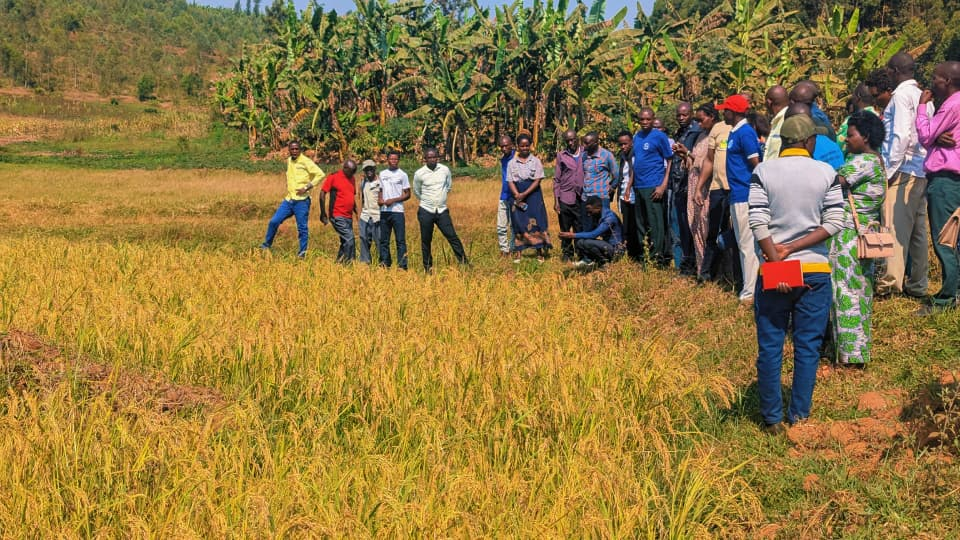
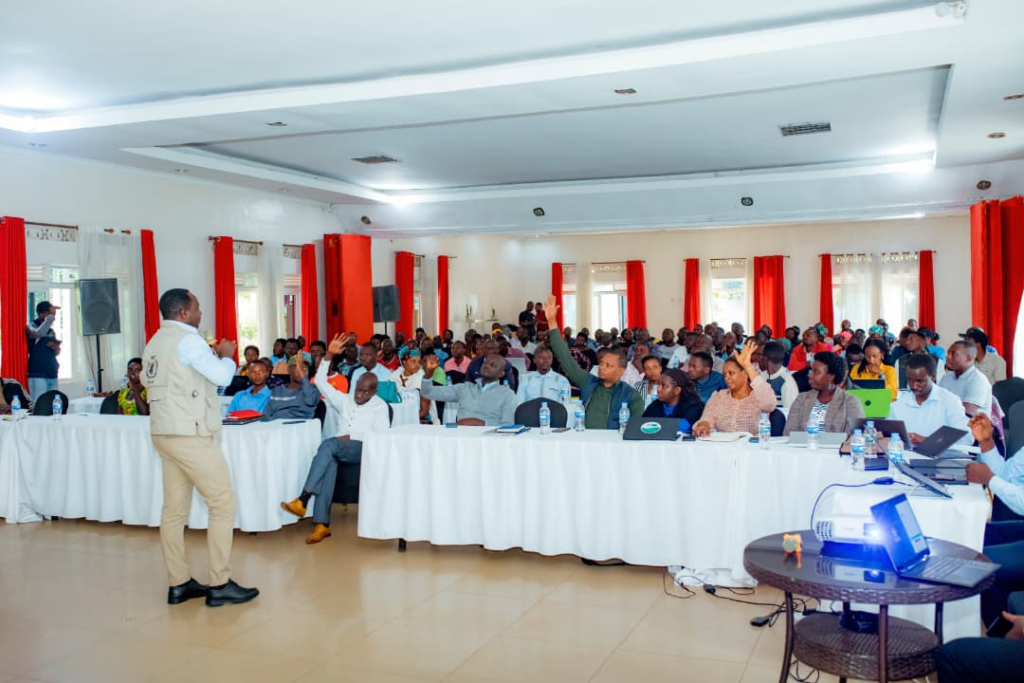
The lesson emerged during a study tour organized by the Rwanda Agriculture and Animal Resources Development Board (RAB) through the Sustainable Agricultural Intensification and Food Security Project (SAIP II), bringing together farmers, cooperative leaders and Water User Association members from Kinoni I, Kinoni II and Nyamugali irrigation schemes in Kirehe District aims to strengthen the capacity of farmers and Water User Associations through practical learning, peer-to-peer exchanges and exposure to successful irrigation management practices.
For many participants, the visit changed the way they think about irrigation. Instead of seeing a dam only as a source of water, they learned that it can become a valuable community asset capable of generating income and supporting its own maintenance.
A Dam That Works Beyond Irrigation
For many irrigation schemes in Kirehe District, maintenance remains one of the biggest challenges after development projects end. Canals break down, water gates require repairs and reservoirs need protection. In many cases, farmers are expected to cover these costs through water service fees and maintenance contributions.
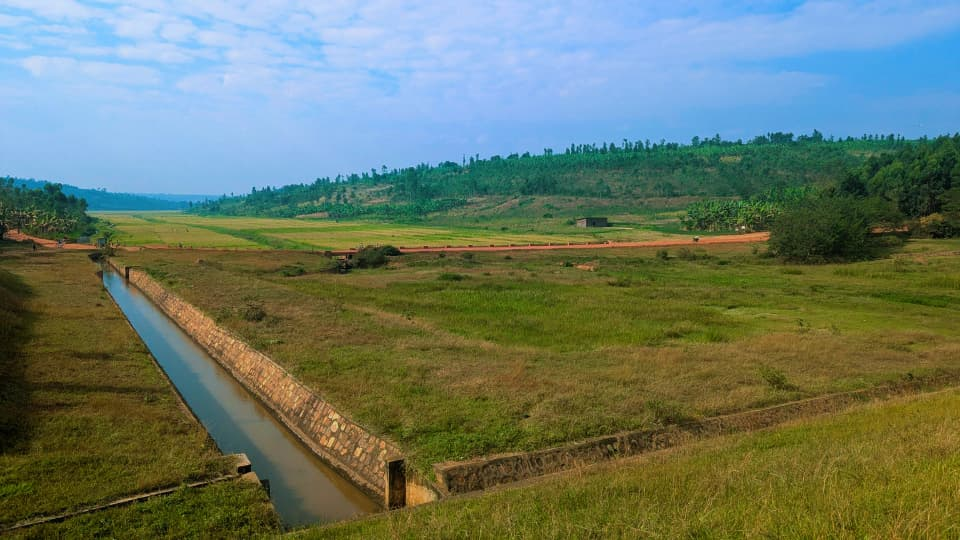
However, leaders of the Kanyonyomba Water Users Association say they have found a different approach.
According to Pascal Ndahimana, President of the Kanyonyomba Water Users Association (UPSAMAKA), the scheme has developed several income-generating activities that help finance maintenance activities and ensure the sustainability of irrigation infrastructure.
“Our advice to other irrigation schemes is simple: do not rely only on contributions from farmers. Create projects that generate income for the Water Users Association. Today we earn money from fish farming, livestock, banana plantations and rental properties. These revenues help us maintain infrastructure, pay workers who manage water distribution and reduce the burden on farmers,” he said.
The Kanyonyomba Irrigation Scheme was constructed in 2005 with support from the World Bank and the Government of Rwanda and started operating in 2006. The dam has a storage capacity of approximately 550,000 cubic metres of water, enabling irrigation of 333 hectares of farmland and serving more than 1,285 members.
The scheme has six main canals, four secondary distribution systems and nine irrigation zones, making it one of the most organized irrigation schemes in the region.
Fish Farming Supporting Infrastructure Maintenance
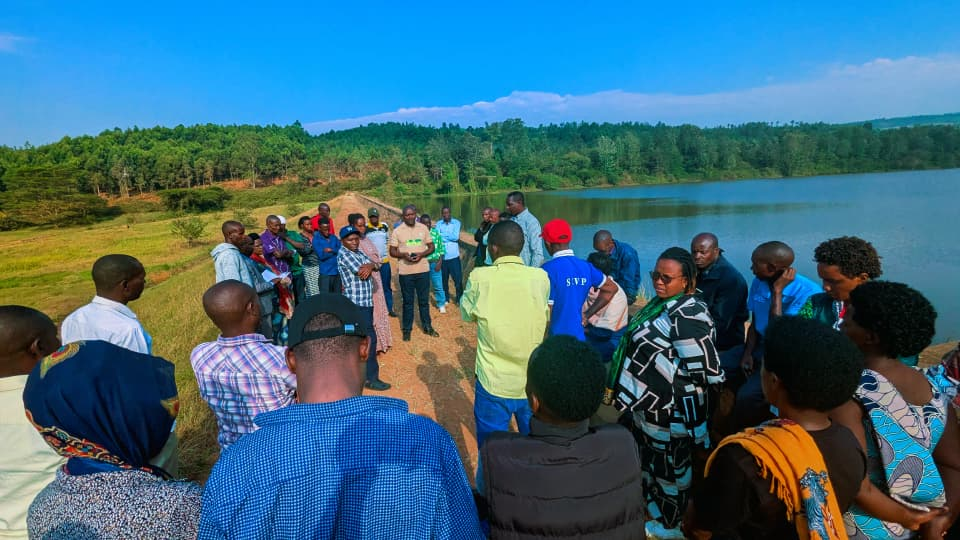
One of the most impressive lessons for visiting farmers was the use of fish farming inside irrigation dams.
Kanyonyomba started fish farming in 2013 after receiving fish fingerlings through support from RAB. Today, the activity generates millions of francs annually and contributes significantly to maintenance costs.
“During the first year we harvested fish worth nearly Rwf3 million. Since then, fish farming has continued to generate income every year. The money is invested in maintaining infrastructure and helping our members. It also helps us pay workers who support daily irrigation operations,” Ndahimana explained.
The scheme operates two dams stocked with fish, generating approximately Rwf4 million annually.
Beyond fish farming, the association has expanded into livestock rearing, banana plantations, beekeeping and rental property management, creating multiple sources of income that support irrigation management.
Turning Community Assets into Revenue
What impressed the visiting farmers most was how Kanyonyomba has built a strong financial system that goes far beyond collecting maintenance fees from farmers.
According to Ndahimana, fish farming generates about Rwf4 million annually, while the livestock project contributes around Rwf3.6 million per year. Banana plantations bring in approximately Rwf700,000 annually, while rental income from the association’s office building contributes about Rwf360,000 each year.
Combined with other income-generating activities, these projects contribute nearly Rwf32 million annually to the Water Users Association’s budget.
The association also benefits from strong community participation. Every year, members contribute labour for canal cleaning, repairing infrastructure and protecting irrigation facilities. The value of this contribution is estimated at Rwf52 million annually.
Together with direct financial contributions from members of approximately Rwf16 million per year, the organization manages an annual budget of nearly Rwf112 million.
Ndahimana said this financial model has allowed the association to reduce maintenance fees paid by farmers.
“If we depend only on farmers’ contributions, maintenance becomes difficult because farmers already have many responsibilities. That is why we invest in projects that generate income and support infrastructure maintenance. Because of these projects, we recently reduced the maintenance fee from Rwf250 to Rwf210 per are. This allows farmers to keep more of their earnings while ensuring that the irrigation system remains sustainable.”
A Lesson Kirehe Farmers Want to Take Home
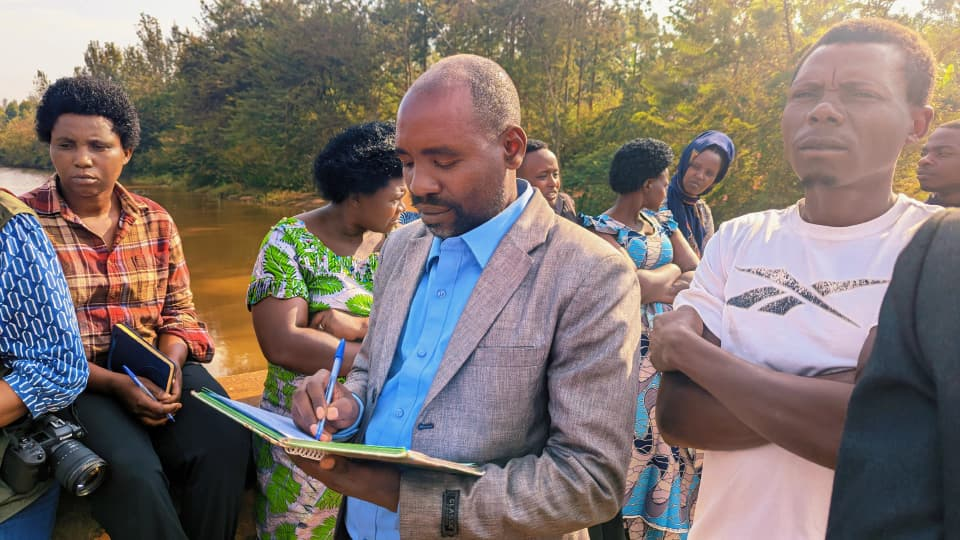
Twiringimana Samuel, President of the Water Users Association in Kinoni II Irrigation Scheme in Kirehe District, said the visit completely changed the way they view irrigation infrastructure.
“We used to think a dam is only for irrigation. But today we have seen that it can also become a source of income. We saw how fish farming, grass harvesting and other activities are generating money that helps maintain infrastructure and support management activities. This is something we want to introduce in our irrigation schemes,” he said.
Samuel noted that many irrigation schemes in Kirehe still depend mainly on contributions from farmers for maintenance and operation costs.
According to him, learning from Kanyonyomba could help create sustainable financing mechanisms and improve the long-term management of irrigation systems.
Knowledge Sharing for Sustainable Irrigation
Jules Mporana, Water Users Organization Specialist under RAB and SAIP II, said the study tour was designed to help farmers learn practical solutions from successful irrigation schemes.
“Irrigation is not only about water. It is also about governance, financial management, ownership and sustainability. Farmers must understand how to manage infrastructure and how to create additional sources of income that can support maintenance and future investments,” he said.
Mporana emphasized that many irrigation schemes across Rwanda were built through major public investments worth billions of francs and therefore require strong community ownership to remain functional for generations.
He warned that relying only on member contributions may not be enough to sustain irrigation infrastructure in the long term.
“When communities learn how to generate income from the assets they already have, they become less dependent on external support. That is the kind of ownership we want to promote through these learning exchanges.”
Jules Concluded saying that the future of sustainable irrigation lies not only in delivering water to crops, but also in turning irrigation infrastructure into productive assets that can finance their own maintenance and support rural development.
The Sustainable Agricultural Intensification and Food Security Project (SAIP), is the Global Agriculture and Food Security Program (GAFSP) funded project through the World Bank. The project objective is to increase agricultural productivity, market access, and food security of the targeted beneficiaries in the project intervention areas.
TCN || The Comments News