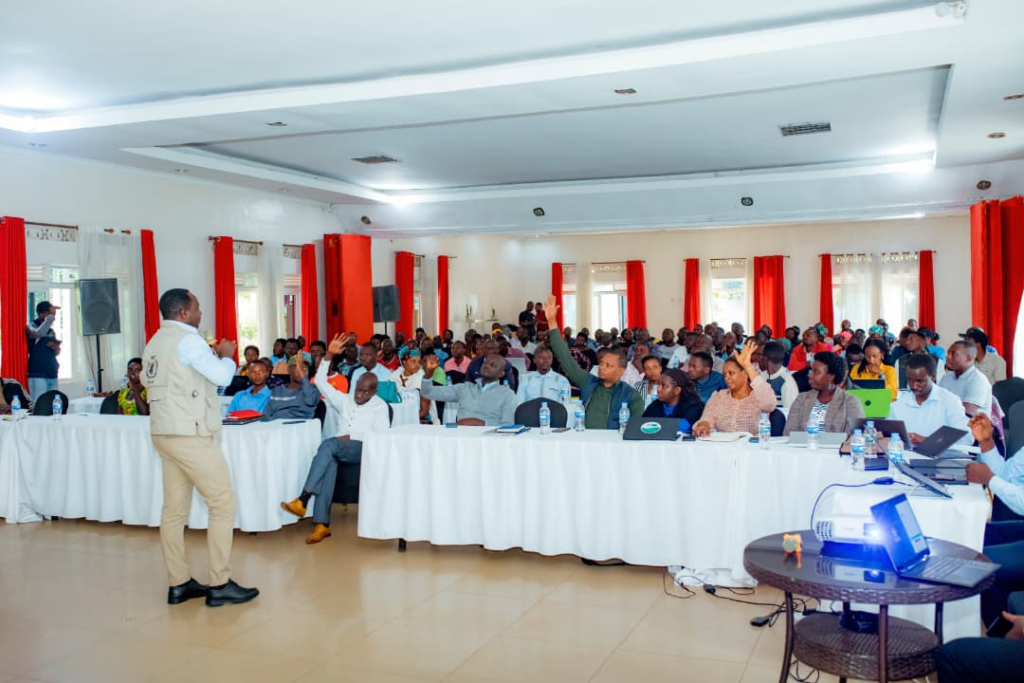
Government of Rwanda increases campaign as climate risks continue to affect agriculture
As climate change continues to affect farming in Rwanda, the government of Rwanda says more farmers are turning to agricultural insurance to protect themselves from losses caused by floods, drought, strong winds and animal diseases.
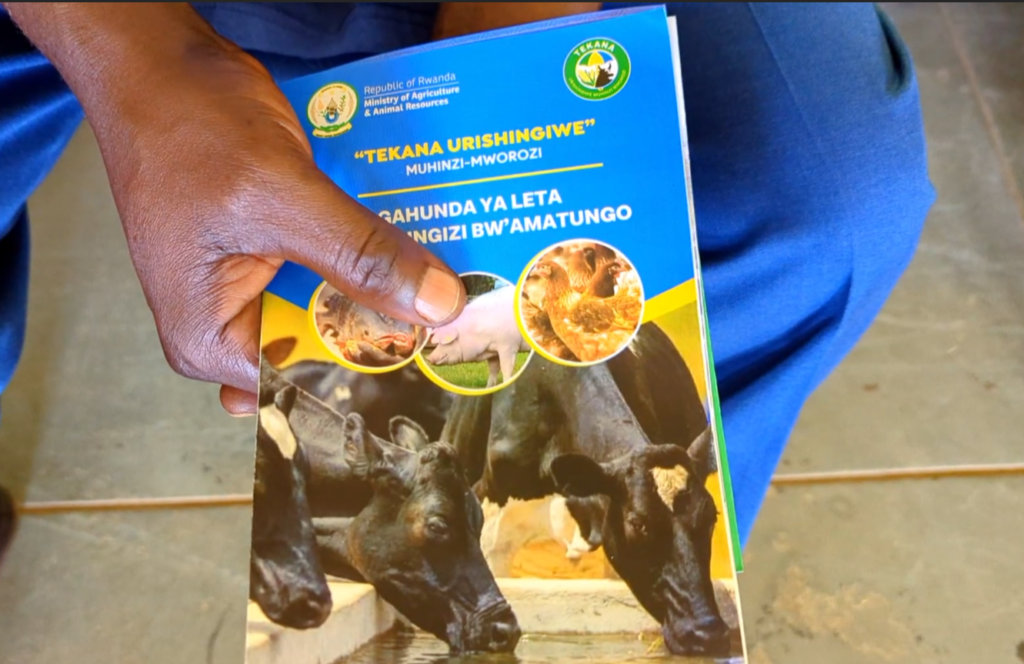
Under the national agricultural insurance scheme known as “Tekana Urishingiwe Muhinzi Mworozi,” more than Rwf9.5 billion has already been paid to farmers and livestock keepers who lost crops and animals because of disasters since the program started in 2019.
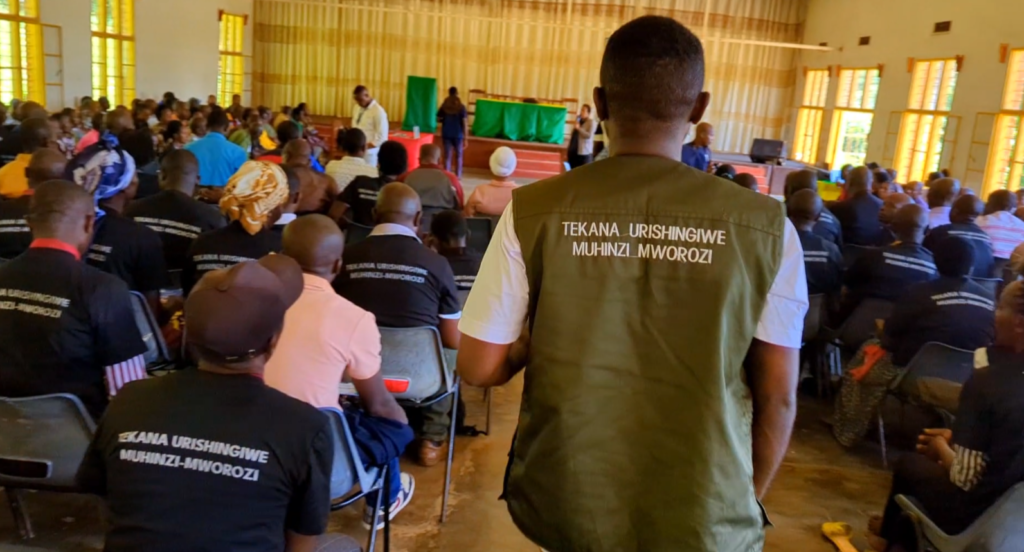
The Ministry of Agriculture and Animal Resources (MINAGRI) and the Rwanda Agriculture and Animal Resources Development Board (RAB) announced the figures during the launch of a week-long awareness campaign on May 25, 2026, in Western Province targeting farmers in Rusizi, Nyamasheke, Rutsiro and Karongi districts.
The campaign aims to encourage more farmers to join the insurance scheme as climate risks continue to increase across the country.
According to government data, more than 200,000 farmers and livestock keepers benefit from subsidized insurance every year under the Tekana scheme. The government covers 40 percent of the insurance cost while farmers pay the remaining 60 percent.
Officials say the scheme has so far collected over Rwf17 billion in insurance premiums, including government support, while compensation worth more than Rwf9.3 billion has already been paid to affected farmers.
Tekana insurance is a Government of Rwanda program implemented by MINAGRI through RAB’s Single Project Implementation Unit (SPIU), in partnership with insurance companies including BK Insurance, SONARWA, Radiant Yacu and Old Mutual. The program is also supported through the Commercialization and De-Risking for Agricultural Transformation (CDAT) Project funded by the International Fund for Agricultural Development (IFAD), the World Bank and the Korea International Cooperation Agency (KOICA).
Climate change increasing risks for farmers
Joseph Museruka, the head of the national agricultural insurance scheme, said climate change is making insurance more important than ever for farmers.
“Farmers used to wait for rain according to the usual farming seasons, but today the climate is changing. Floods, drought and strong winds can destroy crops or kill animals at any time. That is why we are asking farmers to prepare before disasters happen,Disasters do not announce themselves. A farmer who practices modern agriculture or livestock farming should have insurance because the government is already supporting them with 40 percent of the premium.” he said.

Museruka said the number of insured farmers has continued to grow every year since the program began six years ago.
He said around 50,000 cows are insured every year, along with more than 15,000 pigs, nearly 400,000 chickens and more than 32,000 hectares of crops.
The government hopes that by 2029 at least 30 percent of livestock and farmland under selected crops will be insured.
The official also dismissed concerns that compensation takes too long.
“Today no farmer should spend more than 30 days without receiving compensation after reporting a verified loss, we have improved the system. Farmers who are not satisfied with the response can appeal, and we want appeals to be solved within 11 days,” he said.
The Tekana scheme currently covers crops such as maize, rice, beans, Irish potatoes, cassava, soybean and chili. It also covers cows, pigs, chickens and fish farming.
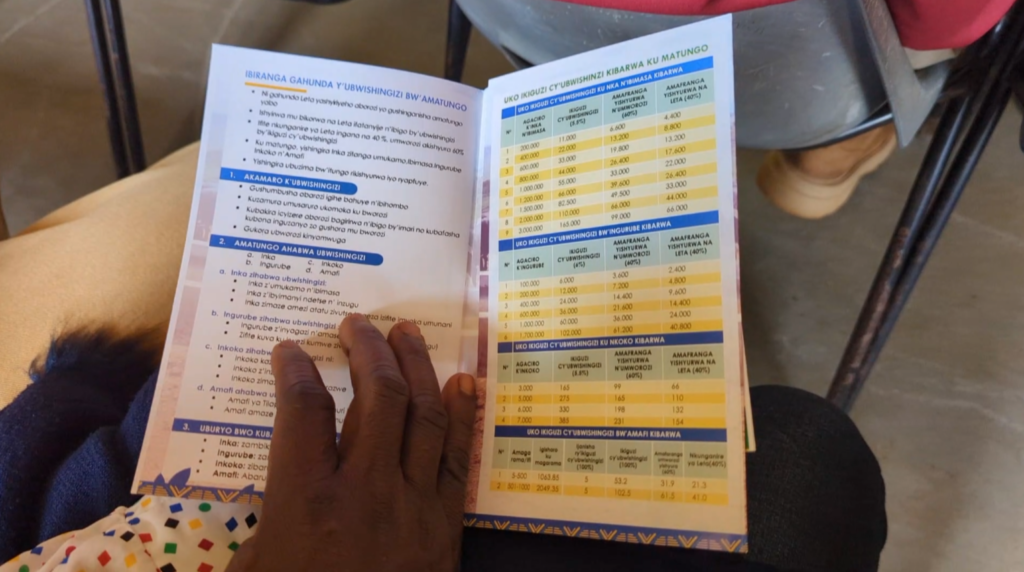
Recently, the government introduced insurance for greenhouse farming. The insurance covers crops grown inside greenhouses, greenhouse structures, irrigation equipment and transportation of produce from farms to markets.
Fish farming insurance has also been added following repeated losses linked to changing weather conditions.
Museruka pointed to recent incidents at Lake Muhazi where fish died after water conditions changed because of heavy rains and rising water levels.
“Fish farming is a big investment. Farmers can lose millions of francs within a short time if a disaster happens. That is why we want everyone involved in agriculture to be protected,” he said.
Thousands of farmers already compensated
Data from MINAGRI shows that between 2013 and 2023, Rwanda recorded nearly 12,000 disasters linked to climate change. The disasters caused an average of 237 deaths every year, destroyed thousands of homes and damaged more than 6,800 hectares of crops.
Floods and drought alone are estimated to cause annual losses equal to 1.75 percent of Rwanda’s Gross Domestic Product (GDP).
For many farmers, the insurance scheme has already become a lifeline.

Furahan Samuel, leader of COYIMUNYA Cooperative and a rice farmer in the Bugarama wetland in Nyakabuye Sector, Rusizi District, said farmers used to suffer huge losses before joining the insurance scheme.
“We invested all our savings in rice farming. Heavy rains would come and destroy almost everything and we did not know how we would recover, but now, because we joined Tekana Urishingiwe Muhinzi Mworozi, we receive compensation that helps us buy seeds and fertilizer again. Without that support, many farmers would have stopped farming completely” he said.
Samuel said the cooperative has spent six years in the insurance scheme and now has 2,362 members farming rice on 354.5 hectares.
“When farmers face disasters, the insurance company comes to assess the losses and farmers are paid on time. Sometimes a farmer expects to harvest two tons of rice but because of diseases or climate problems they harvest only 500 kilograms. In such cases they are compensated, In the six years we have been in the scheme, farmers in our cooperative have received more than Rwf54 million in compensation,” he explained.
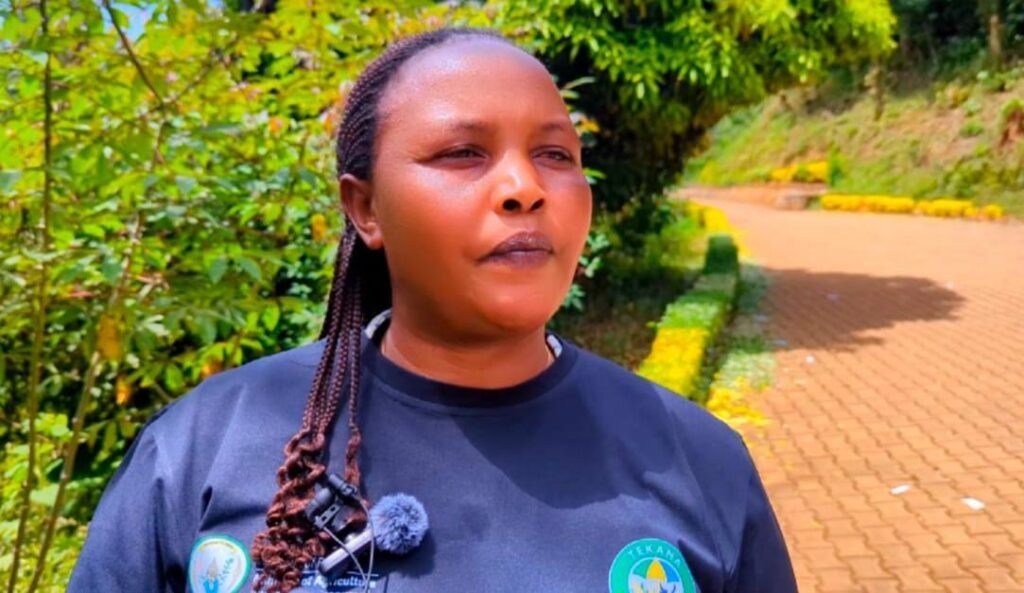
Another farmer, Mukayitesi Beatha, a livestock farmer from Rusizi District, said insurance helped her recover after disease killed some of her live stock last year.
“At first, I thought insurance was only for rich people, but after joining the program I understood its importance, when some of my animals died, I received compensation within a few weeks. That money helped me restart my livestock project. Before, when farmers lost animals, they became poor immediately. But now there is hope” she said.
Western Province among the most affected areas

Rusizi District Mayor SINDAYIHEBA Phanuel said Western Province remains one of the areas most affected by climate-related disasters because of heavy rains, floods and landslides.
“Our district has experienced many disasters that damaged crops, roads and homes, in areas near rivers and hills, farmers regularly face losses because of floods and soil erosion. Agricultural insurance is becoming one of the important tools to help our farmers recover quickly after disasters,” he said.
He added that local leaders will continue working with agronomists, veterinarians and insurance companies to increase awareness among farmers so that more people can insure their farming activities.
The government says one of the biggest remaining challenges is low awareness about financial services and insurance, especially in rural communities.

Officials believe more public education and testimonies from compensated farmers will help increase trust in the scheme.
“We started this journey in 2019 and farmers who joined at the beginning have remained in the program until today, that shows the system is working. What we need now is to reach more farmers before disasters strike again” Museruka concluded
TCN || The Comments News