Farmers who once abandoned soybeans now see the crop as a profitable business after the Food and Agriculture Resilience Mission Pillar 3 (FARM P3) linked them to reliable buyers and modern farming support.
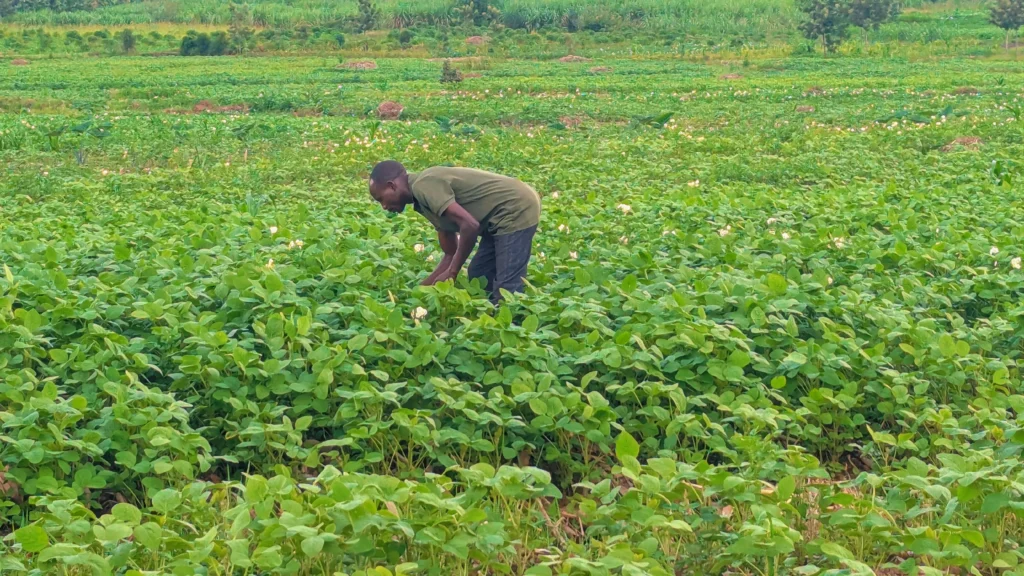
For many years, soybean farming in Kayonza District was losing value in the eyes of farmers. Many preferred other crops because soybeans had no reliable market, resulting in low yields and little profit. Farmers harvested their produce without knowing who would buy it, while others completely stopped growing the crop altogether.
Today, that story is changing.
Farmers in Murundi Sector say the FARM P3 project has restored hope in soybean farming by connecting them to large buyers, improving training, and promoting farming as a business.
A Strategic Partnership for Growth
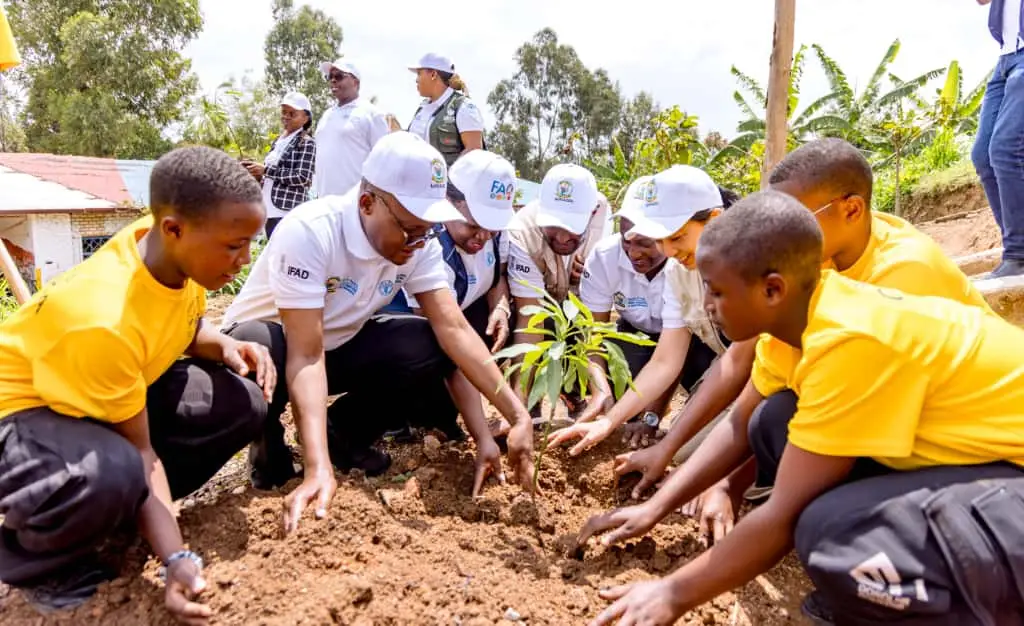
The project, implemented through the International Fund for Agricultural Development (IFAD) in partnership with the Kayonza Irrigation and Integrated Watershed Management Project Phase II (KIIWP2) and the Rwanda Agriculture and Animal Resources Development Board (RAB), focuses on improving soybean and maize production in Kayonza District.
According to FARM P3 officials, soybean yields in Kayonza were previously very low, averaging only 0.6 metric tons per hectare. This was mainly because farmers lacked quality seeds, modern farming knowledge, and guaranteed markets.
Thomas Irakomeza, an IFAD official monitoring FARM P3 activities, said the project started by identifying the real reasons farmers were losing interest.
“We found that many farmers did not trust soybean farming anymore because they were not sure of the market. Some harvested soybeans and failed to find buyers, while others sold at very low prices. Because of that, many abandoned the crop,” he said.
Linking Farmers to Industry Giants
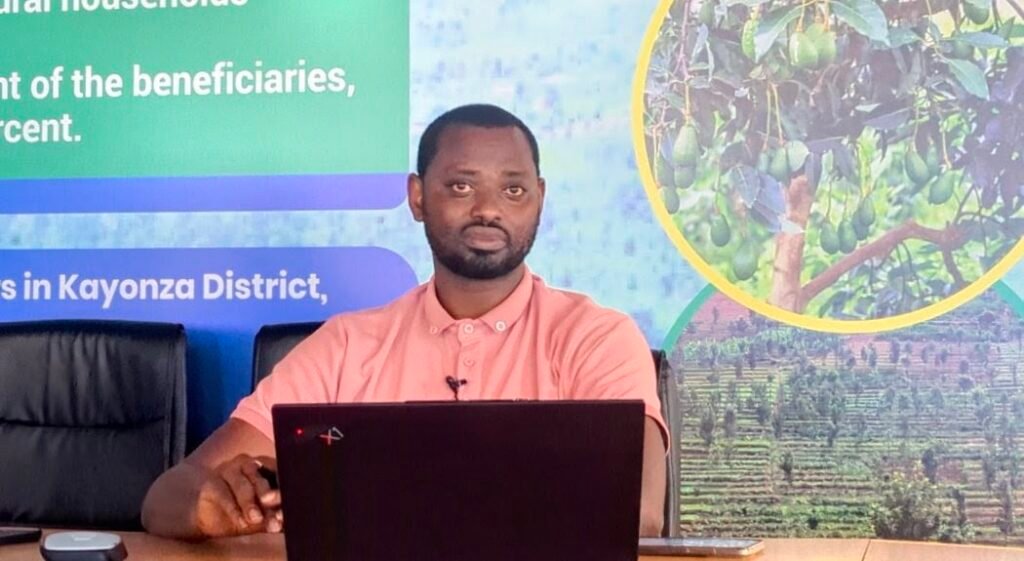
Thomas noted that FARM P3 decided to rebuild confidence by connecting farmers directly to major buyers, especially Africa Improved Foods (AIF), one of Rwanda’s biggest soybean processors.
“Today, farmers plant soybeans knowing there is already a buyer waiting for them. That changed everything. Farmers now understand that soybean farming is not just subsistence farming; it is a business,” he explained.
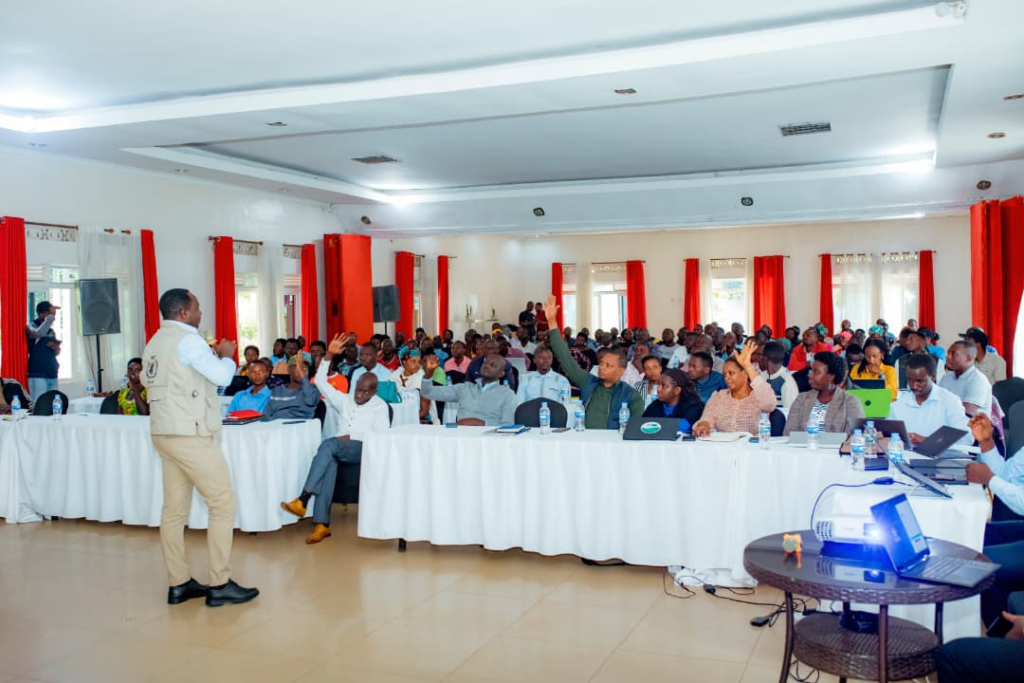
Through agreements between farmers, cooperatives, seed suppliers, and buyers, FARM P3 helps farmers access improved soybean seeds and stable markets. Farmers are also trained in modern methods, including planting in lines, proper fertilizer use, and crop monitoring.
Visible Impact in Murundi Sector
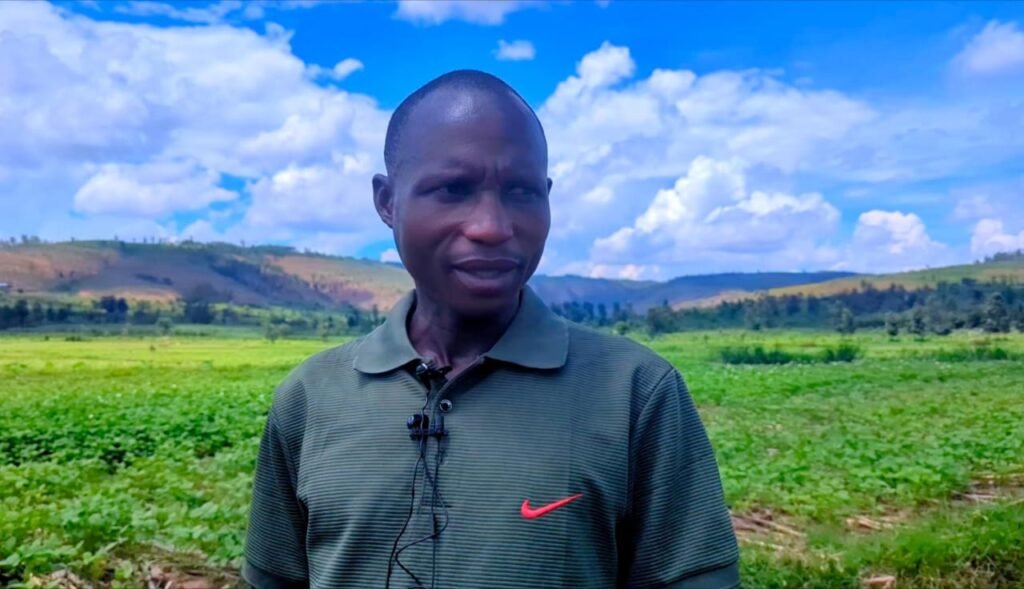
In Murundi Sector, members of the Abakunda Murimo Cooperative say the impact is already visible in their daily lives. Nyandwi Theoneste, president of the cooperative, said soybean farming is becoming one of the most trusted crops in the region.
“Before, people saw soybeans as a crop without value. Farmers could harvest and stay with their produce for a long time without finding buyers. But today things have changed because there is a market. Farmers now know soybeans can bring money and improve their lives,” he said.
The cooperative has 83 members the majority of whom are women farming soybeans and maize on eight hectares of land. Theoneste shared that many members have already improved their living standards.
“Some members bought livestock, others renovated their houses and paid school fees for their children. People who once wanted to leave farming are now staying because they see profits in agriculture,” he said.
Personal Success Stories
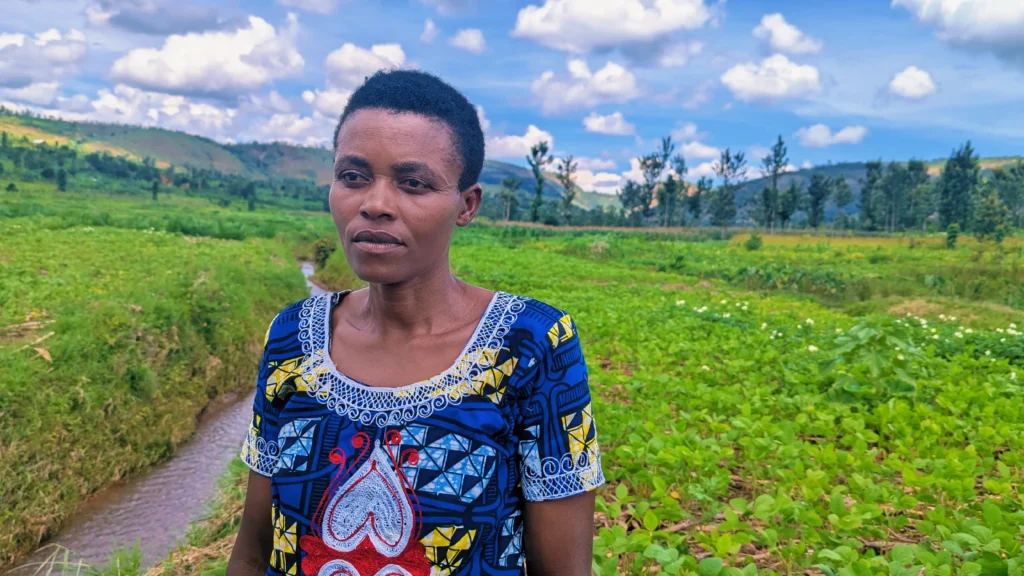
Bosenibo Joseline, a member of the cooperative, said her life changed after joining organized farming.
“Before joining the cooperative, I was very poor and survived by working in other people’s farms. After selling my harvest, I bought a small goat. Later, I improved my house and started supporting my children in school. Agriculture changed my life,” she said. She added that she believes soybeans will help her continue educating her children: “People should stop thinking farming is for poor people only. Farming is business.”
Young farmers are also returning to the sector.
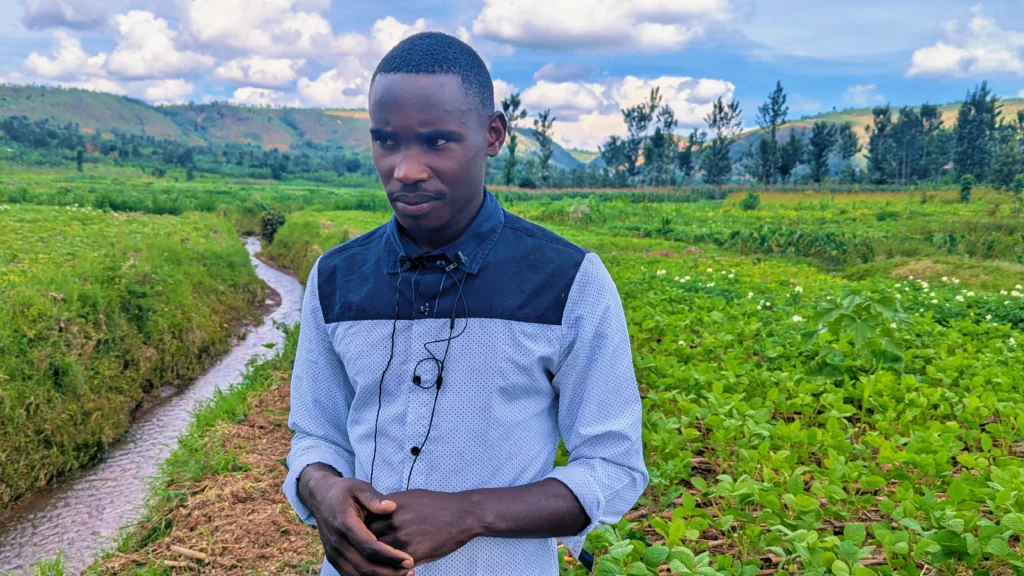
Mutuyimana Innocent, a 24-year-old farmer and peer educator, said modern methods are attracting youth.
“Before, many young people avoided farming because it did not give profits. But today, if farming is done professionally, it can change lives,” he said.
Innocent started farming on rented land of 12 area, but today he owns his own land through his savings.
“I started with only of rented land, now I have my own land of six area because of farming. Soybeans and maize helped me move forward.” He said
Overcoming Challenges and Looking Ahead
Although farmers still face challenges such as poor roads, limited irrigation equipment, and expensive transport costs, many believe soybean farming has a brighter future. Theoneste says attitudes have changed completely.
“Soon you may come here and find soybeans everywhere. People now understand the value of this crop because they can see the market and the profits.” He concluded
The FARM P3 project targets at least 4,000 farmers in Kayonza and aims to increase incomes, improve food security, and reduce post-harvest losses. Data shows that 30 cooperatives are already working with buyers through trading plans, while 3,000 smallholder farmers have received training on better farming and post-harvest practices.
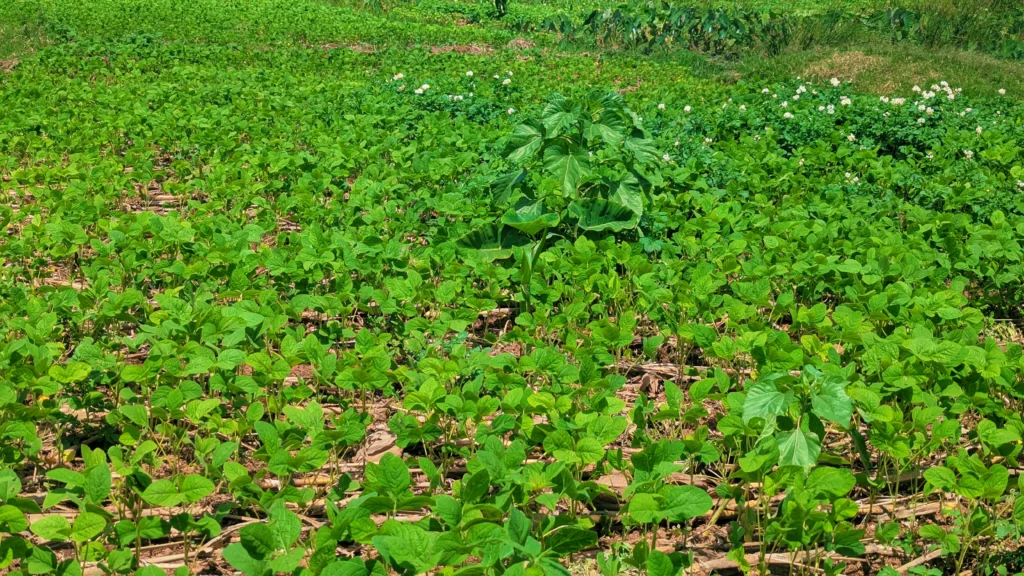
Besides soybeans, FARM P3 is also reducing post-harvest losses in maize, which previously reached 13.8 percent due to poor drying and storage. To solve this, the project has supported the construction of 30 drying shelters and procured four mobile dryers to protect harvests.
The project is currently running as a pilot from February 2025 to June 2026, with funding worth more than USD 650,000 from FARM P3 and additional private sector investment support.
Agricultural transformation happening in Kayonza through the KWIIP 2 project, is supported by the Government of Rwanda in partnership with International Fund for Agricultural Development (IFAD), the project is managed by the Ministry of Agriculture and Animal Resources through the Rwanda Agriculture and Animal Resources Development Board RAB.
TCN || The Comments News