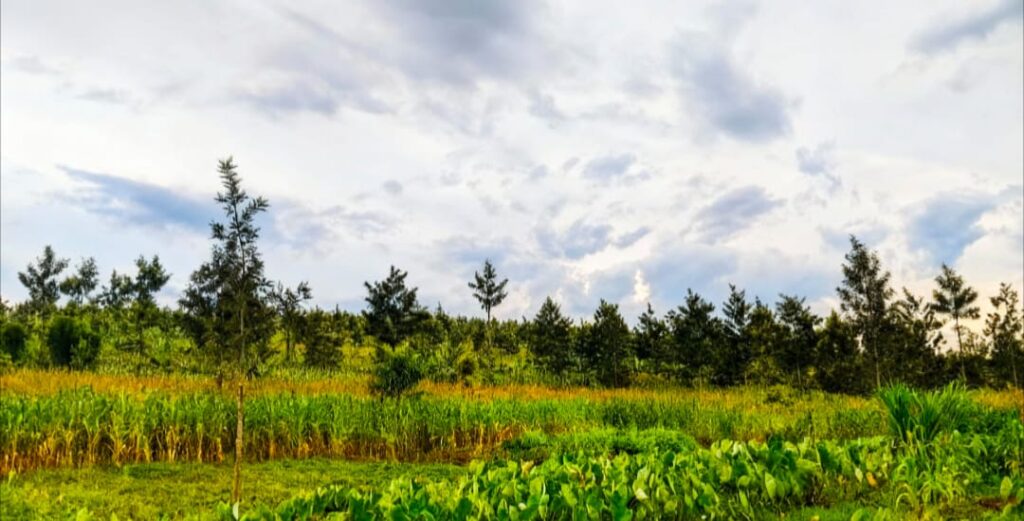
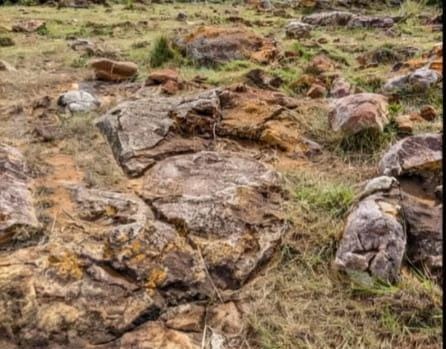
For many years, large parts of eastern Rwanda, especially in Kirehe District, were known for dry weather, strong winds, rocky hills and poor soils. In sectors like Mpanga, Nasho and Kigina, people believed that nothing useful could grow on these hills. Heavy erosion washed away fertile soil, crops failed, and communities struggled with the effects of climate change such as drought and unpredictable rainfall.
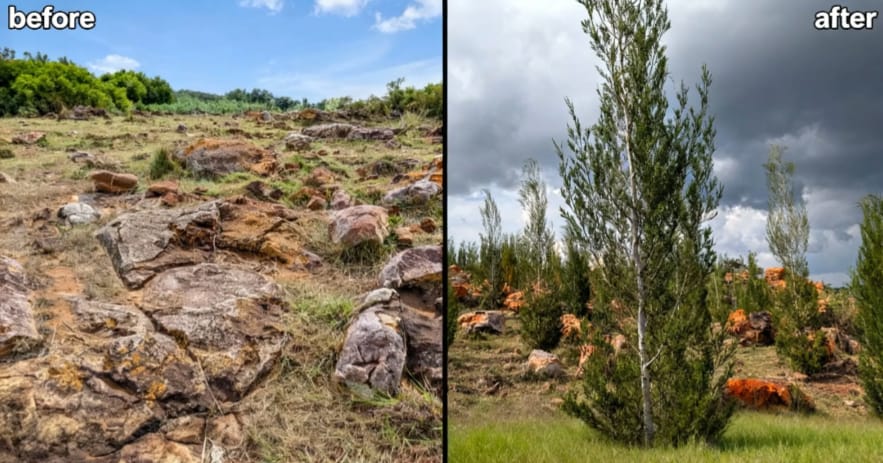
To respond to these challenges, Rwanda put climate resilience at the center of its development agenda. One key response is the National Adaptation Plan (NAP) Project, implemented by the Rwanda Environment Management Authority (REMA) with support from the Global Environment Facility (GEF), at a value of USD 6 million💵. The project focuses on restoring degraded land, strengthening agriculture, and helping communities adapt to climate change.
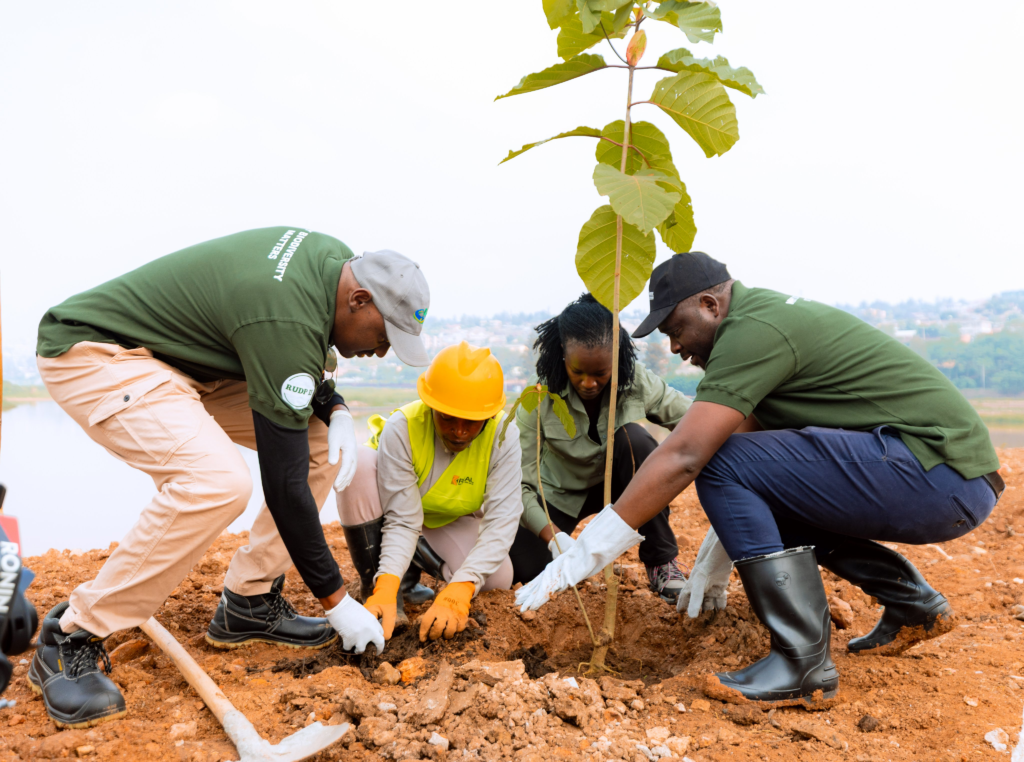
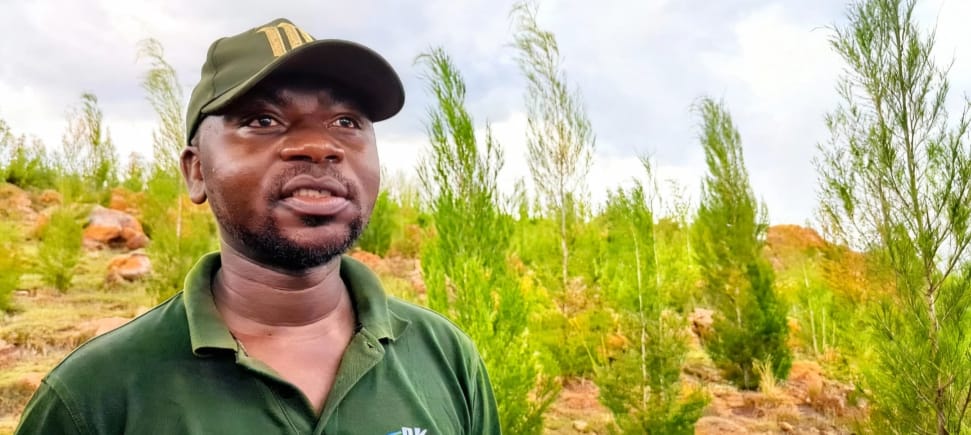
What was once seen as impossible is now becoming a strong example of hope. Through strategic tree planting🌳 and agroforestry, the NAP Project is proving that even rocky, dry land can be restored. “This transformation is already visible on the ground,” says Cyprien Ngendahimana, Communications Specialist at REMA, who has closely monitored the project’s progress.
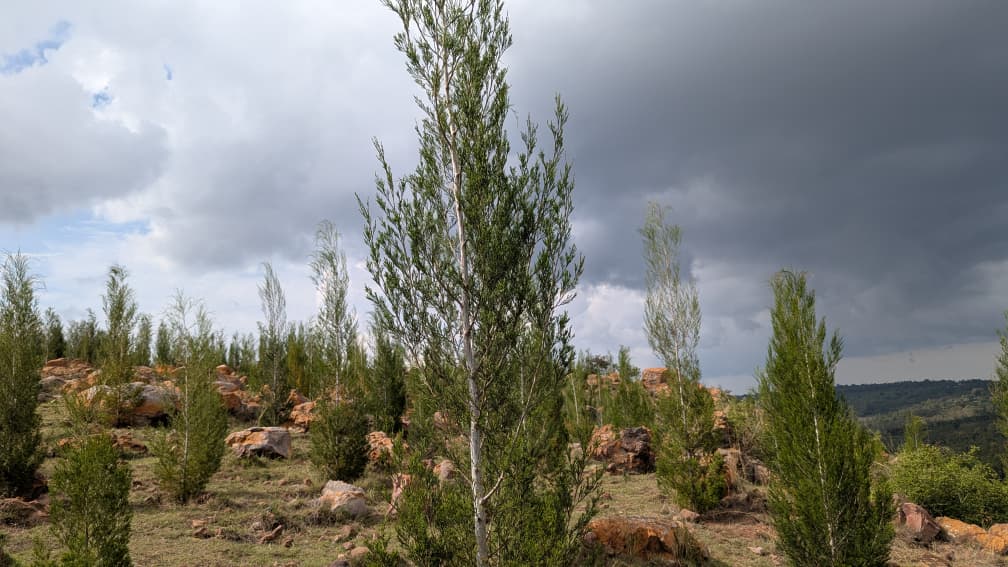
“This place used to be a rocky hill with stones everywhere,The hill was completely bare. Many people believed it had no future. But today, you can clearly see healthy trees growing and giving hope.” Cyprien explains.
Turning Rock into Forest 🌳
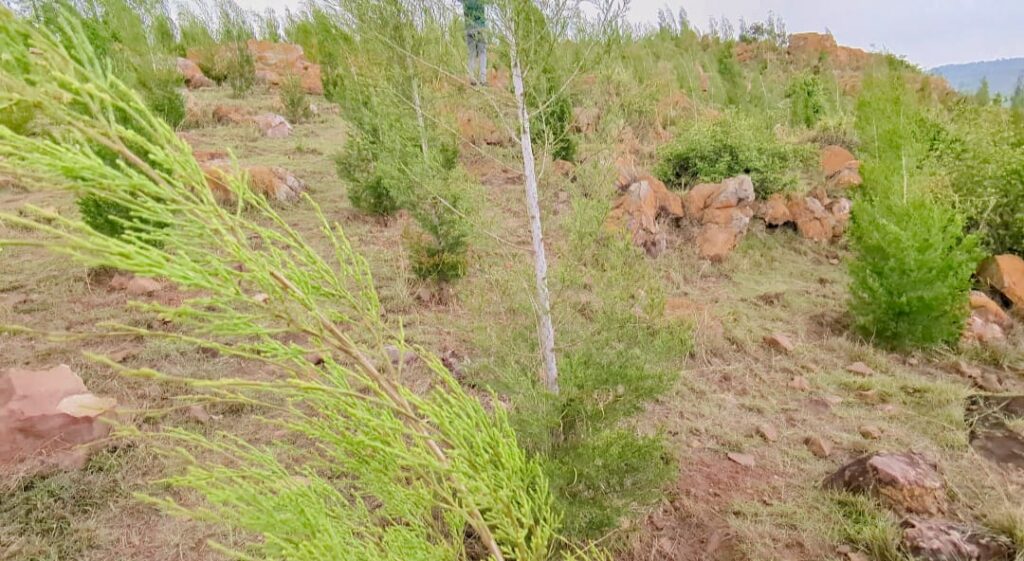
Under the NAP Project, more than 1,400 hectares of land have been planted with trees across Mpanga, Nasho and Kigina sectors. These areas were once extremely dry and affected by erosion. Today, forests are taking shape.
One of the most successful tree species planted is Calitris, known for its strong resilience. According to Cyprien, many tree species were first tested, but most dried up after a few months due to harsh sunlight and rocky soil.
“Calitris trees showed strong ability and strength to grow and stand firm on rocky land, their roots go deep into rock cracks, which helps stabilize the soil and prevent erosion.” he says.
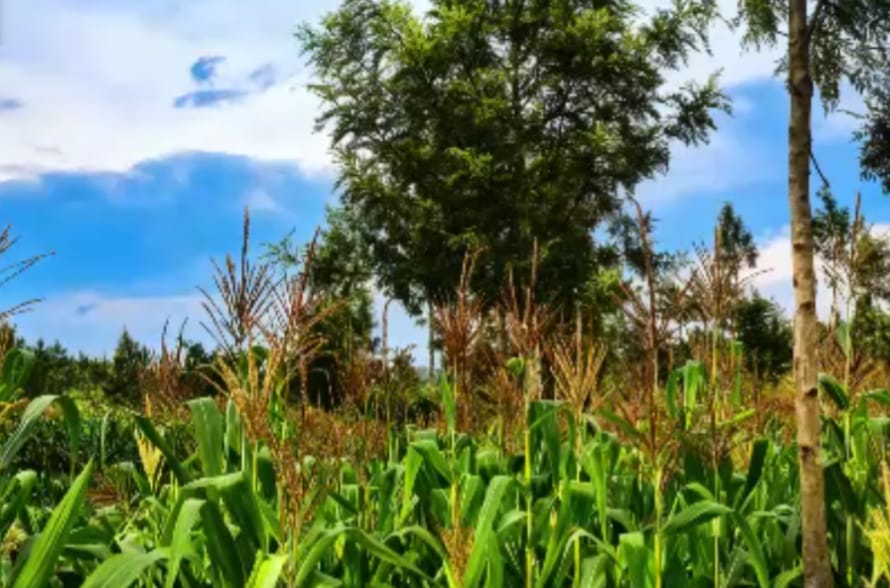
In addition to Calitris, the project planted Eucalyptus on hillsides and agroforestry species such as Grevillea and Calliandra mixed with crops on farmers’ land. Cyprien explain that the Tree type were carefully selected based on farmers’ preferences and what fits each area best.
Benefits Beyond Trees 🌳💚
The impact goes far beyond planting trees. According to REMA, these interventions are already producing clear results. Soil that was once washed away by erosion is now protected. Fallen leaves improve soil fertility, increasing crop yields.
“These trees help restore soil fertility, reduce drought, and attract rain; this area used to be completely dry. In just two or three years, it will be a well-established forest.” Ngendahimana explains
Trees also help protect homes from strong winds that once destroyed houses. Communities now enjoy cleaner air, better shade, and improved microclimates.
Ngendahimana continued “We know trees play a big role in bringing rain, they purify the air and support daily life in many ways. In Rwandan society, trees are very important.”
Voices from the Community 🗣️
Local residents confirm these changes. Eric Ganza, a resident of Mpanga Sector, says the project completely changed their mindset.
“We used to believe nothing could grow here because it was all rock, but now we see trees growing well. We understand that no land is useless. We are committed to planting and protecting trees.” he says.
Another resident, Mukamana Marie Clare from Kibonde Cell, recalls how rain used to fall and quickly flow into Tanzania without benefiting local land.
“It was a big problem, now we protect trees from animals and plant more trees mixed with crops. Rain stays longer and the soil is improving.” she explains.
Leadership Support 👨💼🌿
Local authorities strongly support the initiative. Kirehe District Mayor, Rangira Bruno, says the district is building a strong culture of tree planting.
“Even though our district has strong sunshine, we encourage citizens to care for trees and water them,trees improve livelihoods, nutrition and income. An avocado tree alone can earn a farmer up to 400,000 Rwandan francs per season.” Mayor Bruno says
The district plans to plant 22,500 fruit trees, expand agroforestry on more than 3,100 hectares, and rehabilitate 150 hectares of community forests this year.
National Impact 🌍🇷🇼
At the national level, Rwanda has achieved its commitment to reach 30 % forest cover, a target it set under international restoration goals such as the Bonn Challenge. According to the Rwanda Environment Management Authority (REMA) and the Rwanda Forestry Authority, forests now cover about 724,695 hectares, equivalent to 30.4 % of the country’s land area. This includes plantations, natural mountain rainforests, wooded savannah and shrubs, reflecting significant progress in reforestation and sustainable land management. These efforts align with the National Strategy for Transformation (NST2), which places climate resilience and environmental protection at the heart of Rwanda’s development agenda.
Through the NAP Project, REMA and its partners are proving that climate change can be fought with practical, local solutions.
“As you can see, this land was once bare rock, now it is alive. This gives hope not only for these communities, but for Rwanda and the world.” Cyprien concluded 🌱
TCN || The Comments News