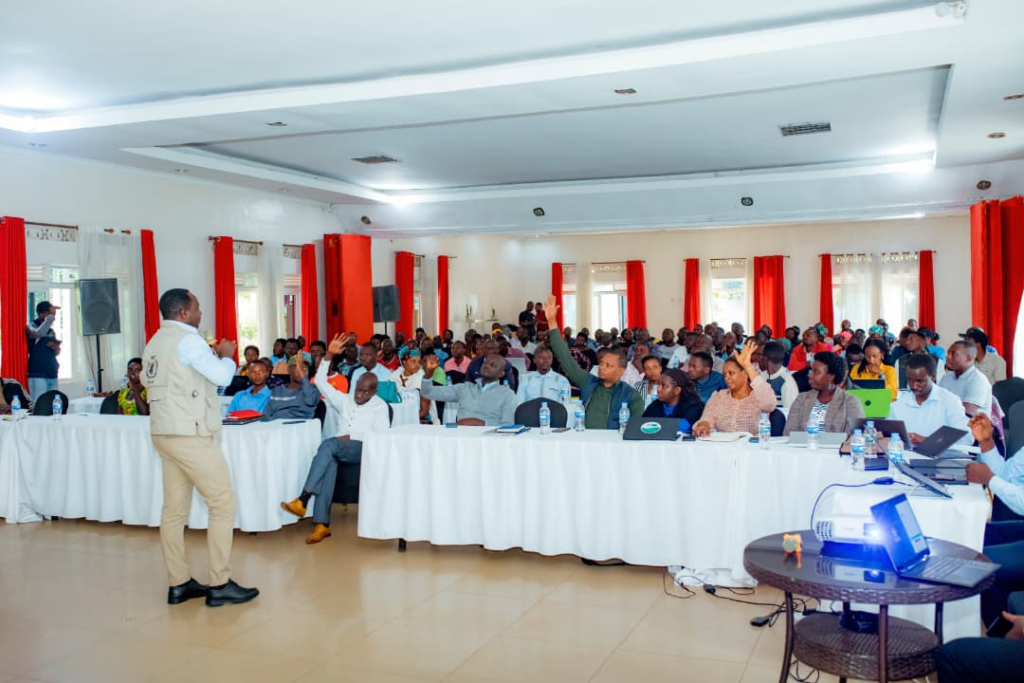
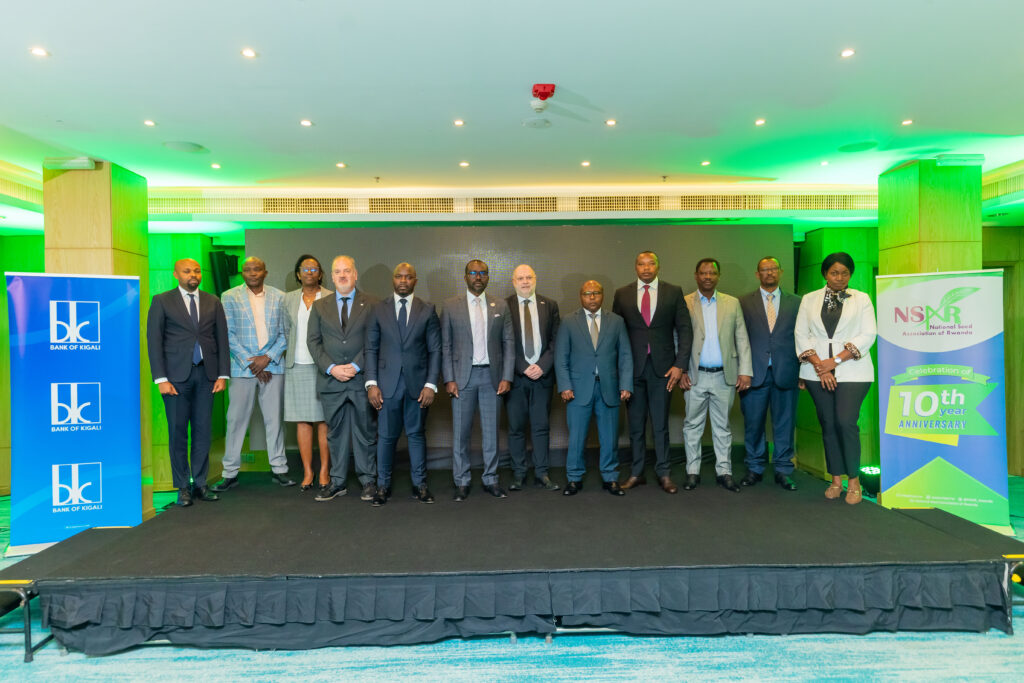
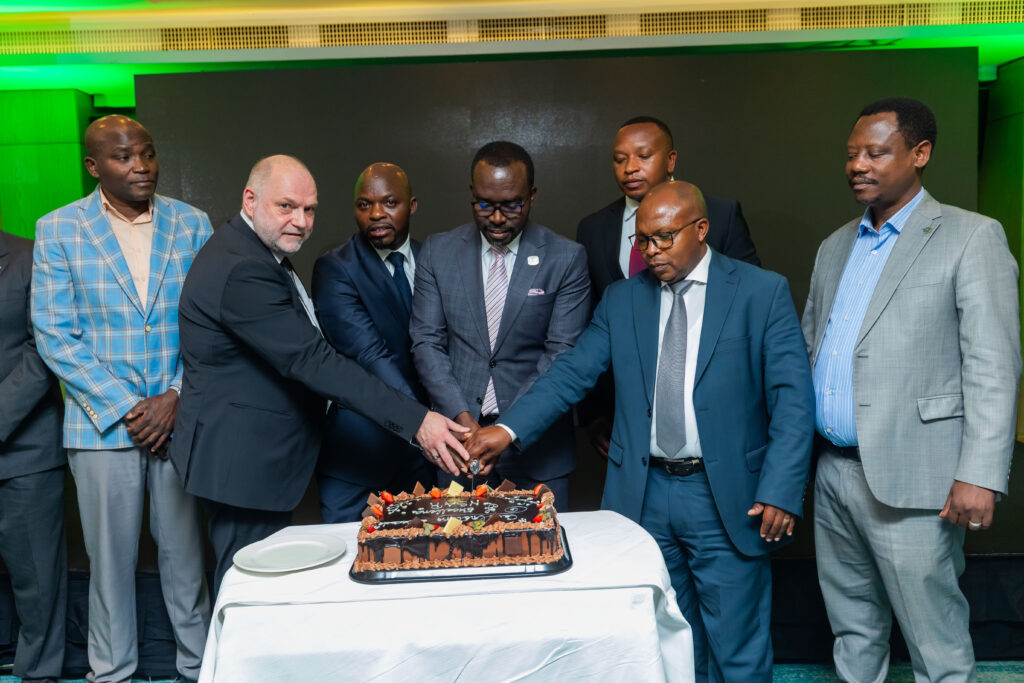
Rwanda has taken a step toward building a strong, resilient, and competitive seed sector following the official launch of the Private Seed Sector’s Joint Memoranda of Understanding (MoUs) and Implementation Plan under the NSAR 7-Year Seed Sector Roadmap (2023-2030). The milestone event took place on Thursday 15 January 2026 in Kigali and event was held as the National Seed Association of Rwanda (NSAR) celebrated its 10th anniversary🎉.
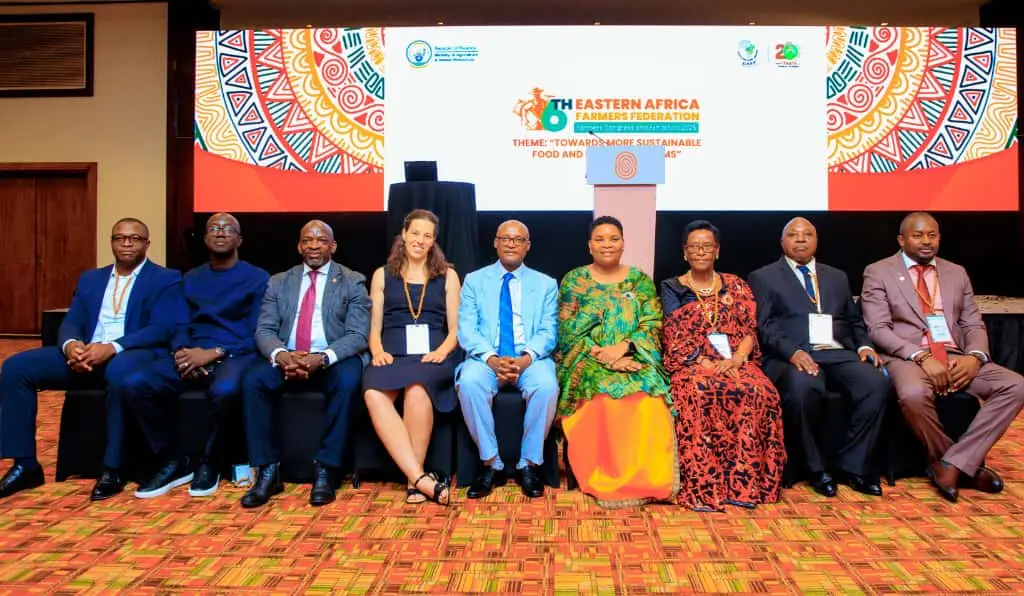
The event was attended by Hon. Dr. Telesphore Ndabamenye, Minister of Agriculture and Animal Resources and Hon. Prudence Sebahizi, Minister of Trade and Industry, alongside senior government officials, private sector leaders, financial institutions, development partners, and international organizations 🤝.
Seeds at the Heart of Food Security 🌾
In his keynote remarks, Hon. Minister Dr Telesphore Ndabamenye, who attended the launch on behalf of the Ministry of Agriculture and Animal Resources, emphasized that seeds are the foundation of agriculture, food security, and resilience.
“Food and nutrition security start with the seed, the quality, availability, and accessibility of seeds directly determine farmers’ yields, incomes, and livelihoods.” Hon. Minister Dr Telesphore said.
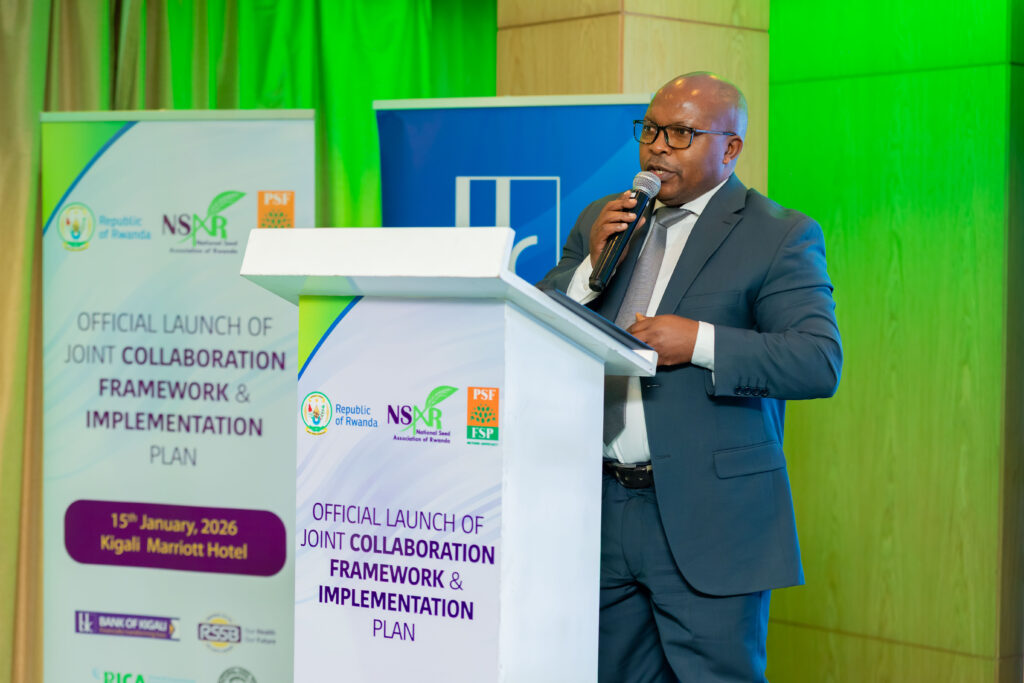
He emphasized that a strong seed sector supports climate-smart agriculture, reduces production risks, strengthens agricultural value chains, and attracts private investment.
“That is why I came here today partnerships. Agriculture cannot succeed without strong public-private collaboration,” he added.
He called on all stakeholders to move from planning to action, reminding participants that farmers are not waiting.
“This launch is not about speeches. It marks a transition from plans on paper to real action on the ground,” he said. 🚜
From Planning to Action
The Joint MoUs and Implementation Plan operationalize the NSAR 7-Year Seed Sector Roadmap, which was developed and launched in 2023. The roadmap aims to transform Rwanda’s seed industry by focusing on seed quality, research and innovation, regulatory reforms, capacity building, and public-private partnerships.
Since its launch, NSAR has made important progress, including the establishment of a Steering Committee, signing an MoU with the International Seed Testing Association (ISTA), training laboratory staff, and advancing discussions on OECD seed certification and improved labelling with the Rwanda Inspectorate, Competition and Consumer Protection Authority (RICA).
The roadmap also addresses key challenges such as fake seed, lack of traceability, limited access to finance, and the need for industry self-regulation.
Finance, Innovation, and Inclusion 💳🌍
Speaking at the event, Hon. Minister Prudence Sebahizi, who officially launched the Joint MoUs and Implementation Plan, highlighted the economic importance of the seed sector.
“Before you get food, you start with the seed. A strong and competitive seed system is not an option it is strategic,” he said.
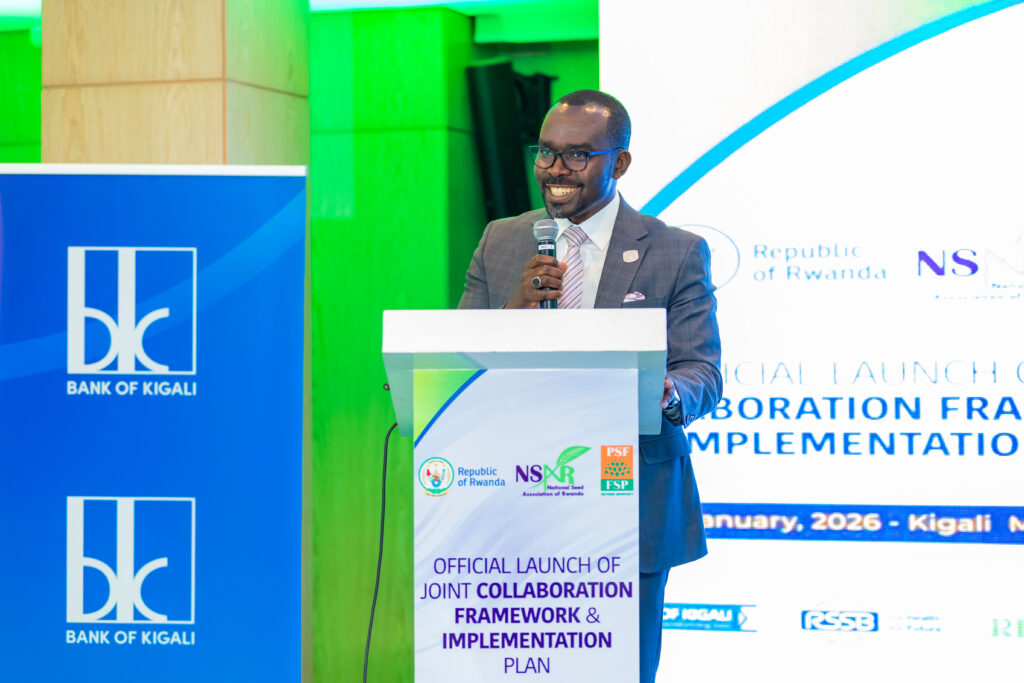
The Minister emphasized that the newly launched implementation plan focuses on:
- ISTA accreditation and OECD certification 🌍
- Regulatory strengthening and self-regulation
- Access to finance and financial inclusion
- Innovation, technology transfer, and climate-resilient seeds 🌱
- Inclusion of women and youth 👩🌾👨🌾
“Together, we are building a seed sector that is credible, investable, and export-ready,” he added.
Hon. Sebahizi also encouraged private investors to seize the opportunity, noting strong commitments from financial institutions such as Bank of Kigali and RSSB, which are supporting access to finance, social security coverage, and formalization of seed sector actors.
Strong Partnerships Driving Change 🤝
The Joint MoUs bring together key institutions, including:
- RICA-for seed quality, labelling, and traceability
- Bank of Kigali -for tailored financial products and digital inclusion
- RSSB -for formalization, social protection, and job creation
- Development partners such as Gates Foundation, FAO, AATF, AFDB, OECD, BRD, and BAYER – supporting technology transfer and capacity building
These partnerships aim to support over 500 seed sector actors, improve seed authenticity systems, expand research and variety testing, and strengthen Rwanda’s position in regional and international seed trade.
NSAR Leadership: A Decade of Impact 🎉
NSAR Chief Executive Officer Innocent Namuhoranye described the launch as a historic moment for Rwanda’s agriculture and private sector.
“This is not where the work started; today we are making it public, What matters is coordination one voice, one direction so that farmers receive quality seeds that match the country’s vision.” He spoke
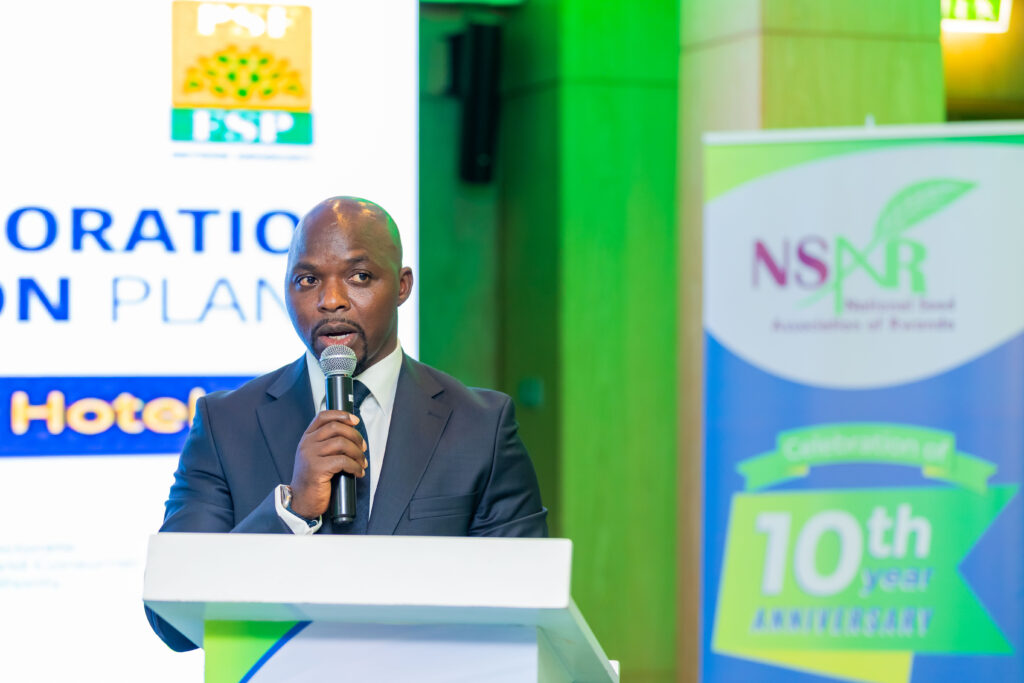
He also emphasized that farmers need more than just seeds: they need knowledge, access to finance, quality inputs, and reliable markets.
“None of this is possible without strong collaboration between government, regulators, banks, seed companies, and development partners,” he added.
Looking Ahead 🌍
By the end of 2026, NSAR expects clear results: better seed quality, improved farmer access to genuine seeds, stronger private sector participation, increased investment, and Rwanda positioned as a regional leader in quality seed production and trade.
As the Ministers concluded, the message was:
“There is no time to wait. Farmers are ready. Let us shift from talk to action.” 🌱✨
With strong leadership, committed partnerships, and a clear roadmap, Rwanda’s seed sector is set to play a central role in achieving food security, economic growth, and sustainable development for years to come.
TCN || The Comments News