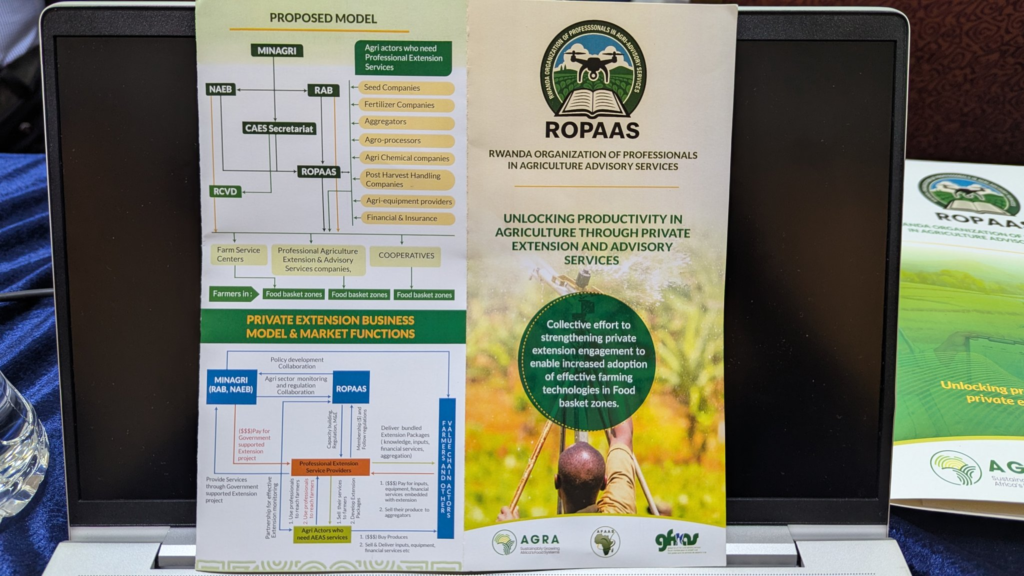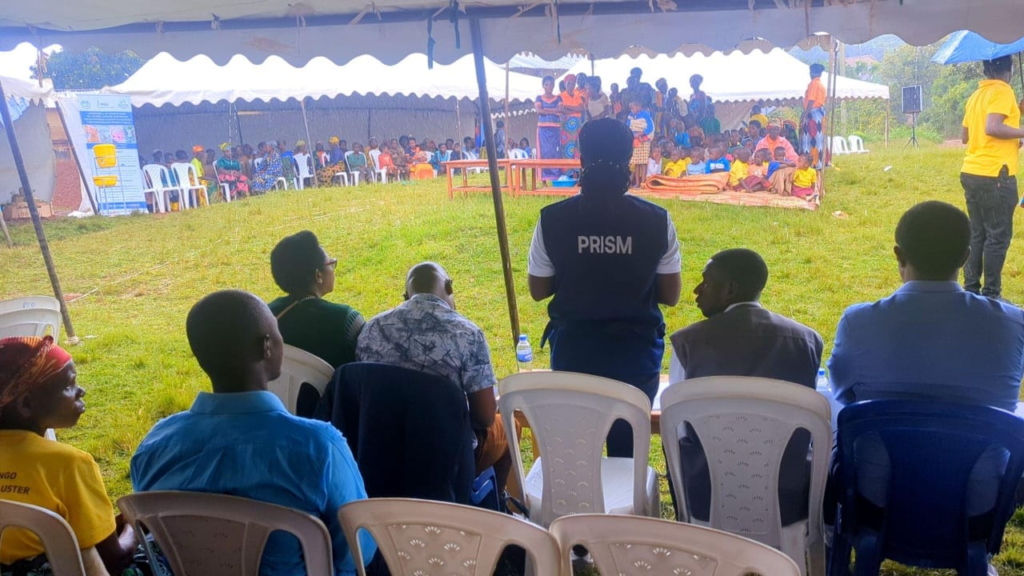
The Ministry of Agriculture and Animal Resources (MINAGRI) has called for a shift toward a professionalized, private-sector-led agricultural extension system to meet Rwanda’s ambitious Vision 2050 and food security targets.

Speaking at the National Policy Dialogue on Agricultural Extension and Advisory Services organized by the Rwanda Organization of Professional Agriculture Advisory Services (ROPAS) in collaboration with the Ministry of Agriculture and Animal Resources (MINAGRI) on 26 March 2026, Dr. Olivier Kamana, Permanent Secretary at MINAGRI, emphasized that while public agronomists remain a vital “human resource,” the government cannot achieve its goals through public infrastructure alone.
The dialogue comes as Rwanda implements its Strategic Plan for Agriculture Transformation (PSTA 5). The government has set a demanding target to increase the productivity of priority crops by 50% and dramatically expand extension coverage.
“Under SDG, we have set a clear target to increase the productivity of priority crops by 50% and expand extension coverage from the current budgeted 5% to 69% by 2029,” Dr. Kamana Said
He added that: “These targets require a stronger and more responsive extension system. Public extension alone cannot meet the growing demand for specialized, targeted, and market-driven advisory services.”

The Ministry is now prioritizing “private extension” as a bridge between high-level policy and results on the ground, specifically to support the “food basket site” approach a strategy focused on market organization, climate-smart practices, and aggregation.
A central theme of the dialogue was the need for a professional regulatory body to oversee agricultural advisors, similar to those governing engineers or doctors. Dr. Kamana suggested that Rwanda should draw on the experience of the Rwanda Council of Engineering and Land Surveying to ensure practitioners are qualified and ethical.
“The establishment of appropriate professional counseling or a related framework for agricultural extension practitioners would help strengthen service quality, build public confidence, and support the long-term development of private extension, this is not about creating structures for their own sake. It’s about ensuring performance, credibility, and trust.” He said.
The Rwanda Organization of Professional Agriculture Advisory Services (ROPAAS), established in June 2024, was lauded for organizing the dialogue in collaboration with AGRA and the African Forum for Agricultural Advisory Services (AFAAS).
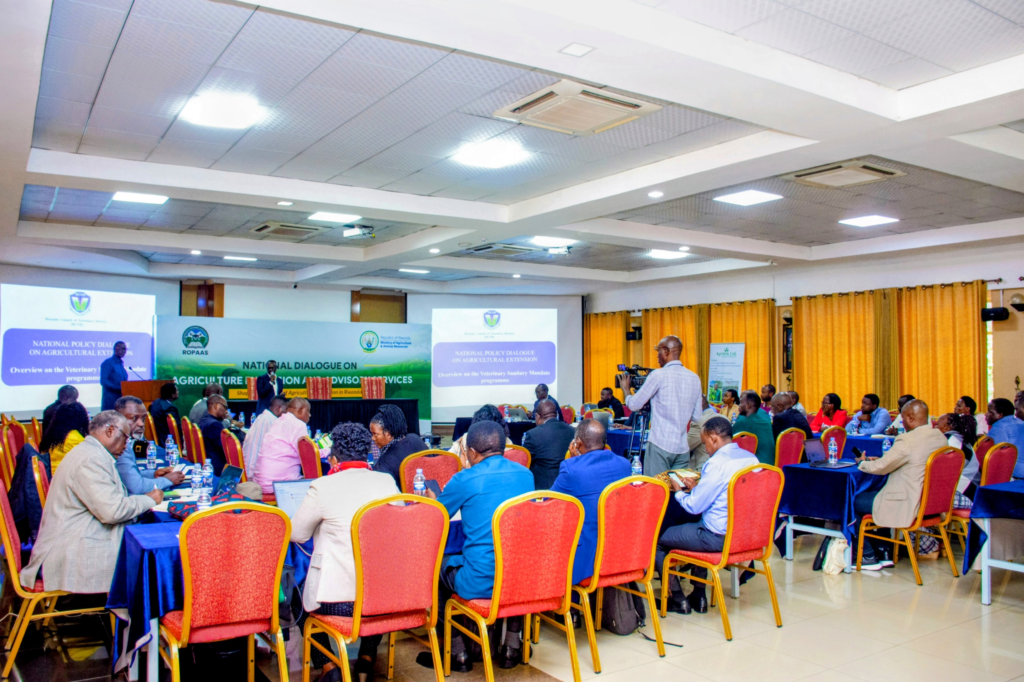
The Chairperson of ROPAAS Innocent Ntabana highlighted that while the organization is young having officially registered in May 2025 it represents a growing network of private entrepreneurs already managing extension companies across the country.
“People you see here, they are managing agricultural extension companies in Rwanda. They are many, and they are here already to express what they are doing,Private service providers can bring specialized knowledge, valuable services, market linkage, and practical solutions that respond to the realities of farming value chains.” The Chairperson Innocent said

The Chairperson supported the call for regulation, noting that the growth of the sector must be paired with quality assurance.
“As the sector expands, Rwanda will need a stronger legal and institutional framework to guide regulation, certification, and capacity building. Let us demonstrate through our work that professional advice and services can make a real difference in Rwanda’s agricultural transformation.” He said
The dialogue concluded with a commitment from government, academia, and civil society to build an inclusive system. By transitioning from a purely public-funded model to a pluralistic system where private consultants work alongside government agronomists Rwanda aims to ensure that every farmer has access to the “practical, timely, and professional support” needed to turn agriculture into a market-oriented business.
Currently, ROPAAS has about 350 members, mostly qualified agronomists committed to raising farmers’ incomes. The association will help set professional standards and build capacity.