For many years, Ndego Sector in Kayonza District told a story of struggle. Farmers worked hard on their land, but the land often failed them. Frequent droughts, combined with heavy rains that washed away fertile soil, made agriculture unpredictable. Most families grew just enough food to survive, leaving the region highly vulnerable to food insecurity.
Today, that story is being rewritten into one of hope, resilience, and economic progress. Through the Kayonza Irrigation and Integrated Watershed Management Project Phase II (KIIWP2) ,a project jointly implemented by the Government of Rwanda in partnership with the International Fund for Agricultural Development (IFAD), through the Ministry of Agriculture and Animal Resources (MINAGRI), and implemented under the Rwanda Agriculture and Animal Resources Development Board (RAB) farming is no longer just a way to survive. It is becoming a professional business that generates income and improves livelihoods.
A Strong Fight Against Hunger
Kayonza District has long been one of the areas most affected by severe dry spells in Rwanda. KIIWP2 was designed to address this challenge by investing in sustainable irrigation, watershed management, and climate-smart agriculture.
According to Danne Mandela, Value Chain Development Specialist and Project Officer under KIIWP2, the project aims to reach between 40,000 and 50,000 rural households approximately 180,000 people with interventions that strengthen food security and increase incomes.
He explained that restoring productivity begins with restoring the land itself.
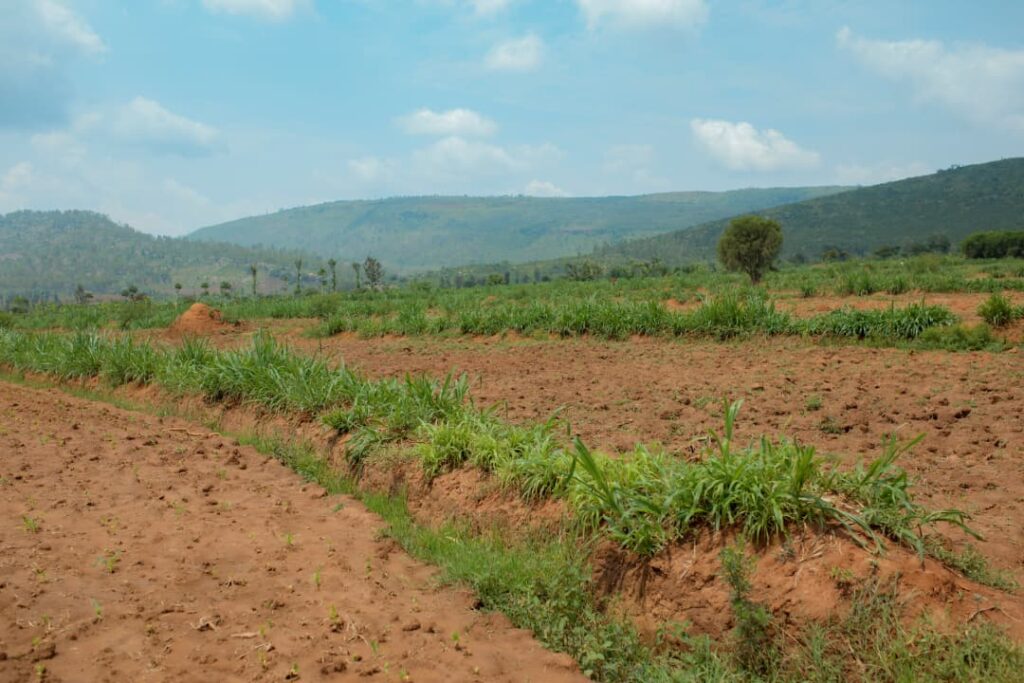
Because Ndego is largely hilly, soil erosion had become a constant threat. To address this, the project introduced radical terraces flat step-like structures built along hillsides. These terraces act as barriers that stop rainwater from washing away soil while helping land retain moisture.
So far, more than 1,246 hectares of land have been rehabilitated, improving soil fertility and creating better growing conditions for farmers.
From Struggling Farmers to Agribusiness Actors
Musabyimana Delifine, a farmer from Kiyovu Cell in Ndego Sector, said the combined support in terracing and agribusiness training changed her life.
She explained that before the project, farming felt discouraging because crops could not survive extreme weather conditions.
“Before the terraces were constructed, farming felt like working without results. Crops could not survive heavy rains or drought. After the training and the infrastructure, my land became productive again. Today my harvest has more than doubled. I produce enough for my family and still have surplus to sell. Farming has moved from survival to a business.”
Her experience reflects the wider transformation happening across the sector, where improved land husbandry is directly increasing yields and food availability.
Learning the “Business” of Farming
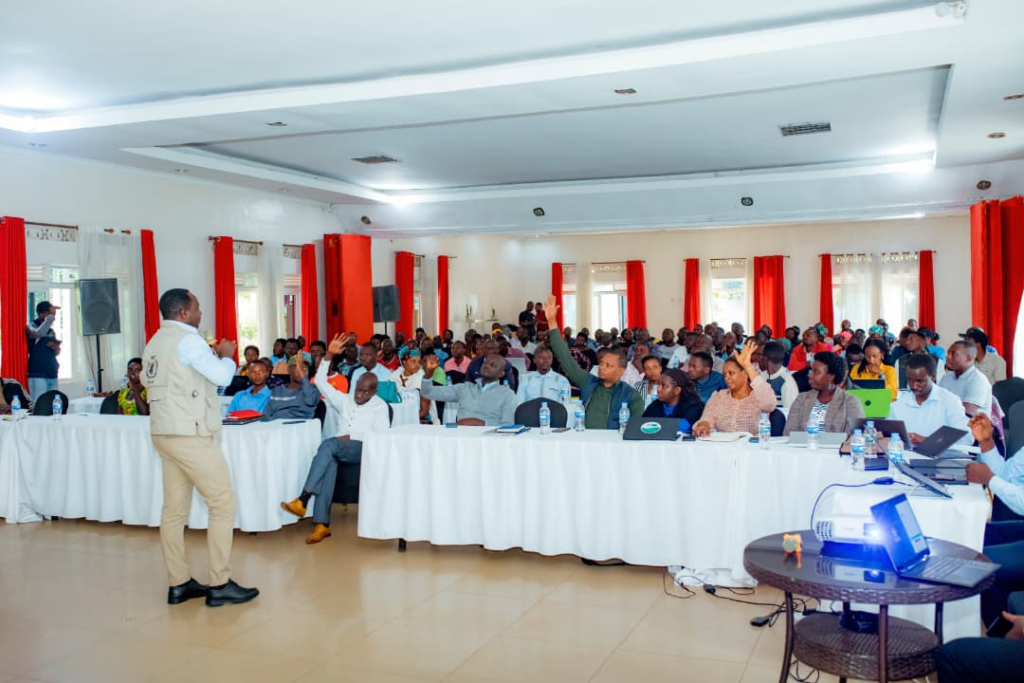
While terraces restored the land, the project recognized that farmers also needed business knowledge to turn production into profit. A central pillar of KIIWP2 is Farming as a Business (FaaB), delivered through Farmer Field Schools (FFS).
Jean de Dieu Rudacogora, a finance specialist within the project, said the training focuses on helping farmers manage their farms like small enterprises.
Through these schools, more than 12,700 farmers have been trained. Participants learn how to calculate input costs, analyze markets, track profits, and plan investments. They are encouraged to focus on high-value and market-driven crops such as maize, soybeans, cassava, Irish potatoes, fruits, and vegetables.
Christine Mukagasana, a cooperative member, said the financial literacy training completely changed her farming mindset.
“We were farming without knowing whether we were gaining or losing. I never calculated my production costs. After the training, I began recording every expense seed, fertilizers, labor and comparing it with my sales. Now I know my profit margins. I grow crops that the market needs, and I save part of my earnings. I have built a house, I pay community health insurance, and I am saving for my future.”
Her story highlights how agribusiness skills are improving not only farm productivity but also household welfare.
Strength in Numbers and Inclusion
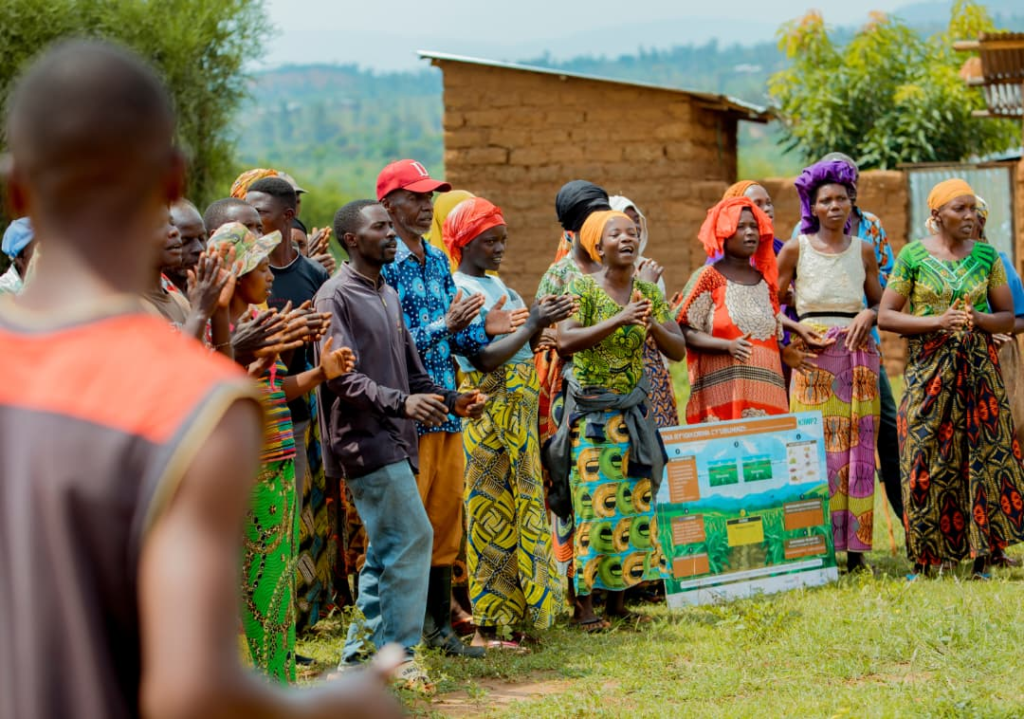
Cooperatives are playing a key role in sustaining these gains. By working together, farmers access inputs more easily, share knowledge, and sell produce collectively to secure better prices.
The project also promotes inclusion, targeting 50 percent women and 30 percent youth participation. This approach is creating employment opportunities not only in farming but also in irrigation management, post-harvest handling, and agricultural services.
Youth engagement is particularly important in ensuring agriculture remains a viable economic pathway for future generations.
A Model for Rural Prosperity
The impact of KIIWP2 is already visible in community welfare indicators. Monitoring data shows that 72.5 percent of beneficiary households have increased their incomes surpassing the project’s original target of 60 percent.
Food security has also improved significantly, with more than 70 percent of families reporting better access to nutritious meals compared to the period before project interventions.