Leaders call for urgent shift from climate plans to real action
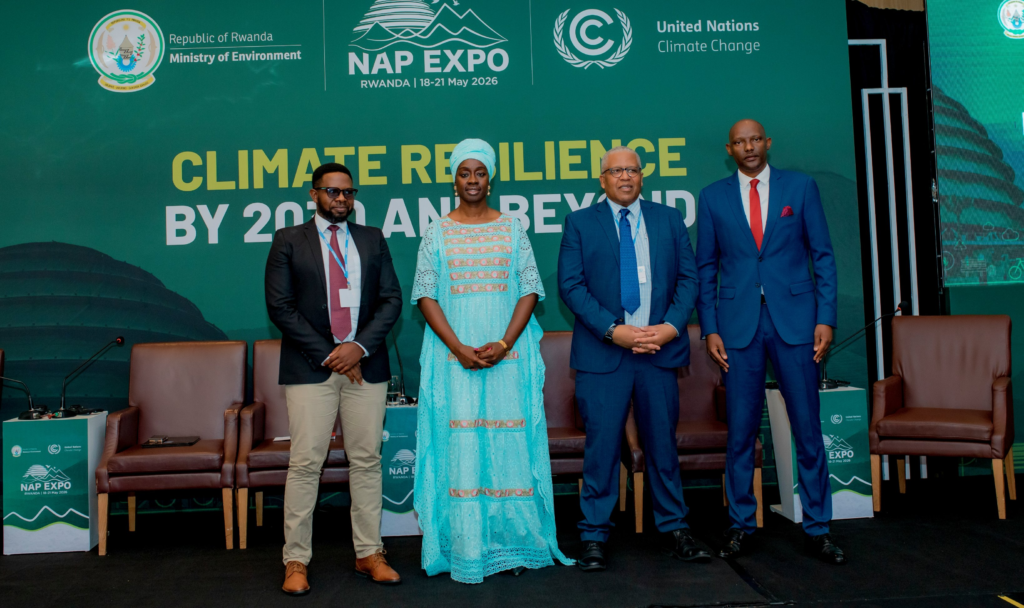
Rwanda has called on countries and global partners to move climate adaptation plans from paper to action, as leaders gathered in Kigali for the opening of the 11th Global NAP Expo 2026. The event brings together governments, climate experts, development partners, and financial institutions to discuss how vulnerable countries can access funding and strengthen resilience against climate change.
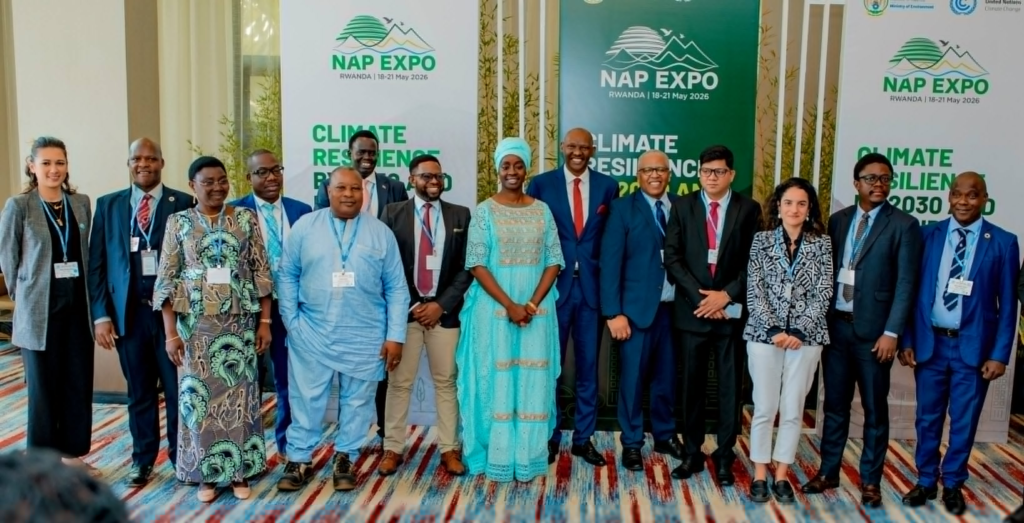
The four-day Expo, hosted in Kigali from May 18–21, is taking place under the theme “Climate Resilience by 2030 and Beyond.”
Rwanda says climate plans must deliver results
Speaking during the opening ceremony, Deputy Director General of the Rwanda Environment Management Authority (REMA), Faustin Munyazikwiye, said countries must urgently move from climate planning to real implementation.
“We are delighted to host this platform that brings together countries, practitioners, development partners, researchers, and communities committed to advancing climate adaptation and resilience,” he said.
“As climate impacts intensify worldwide, National Adaptation Plans remain critical tools for integrating resilience into national development planning and investment. We believe that this NAP Expo is an opportunity for country delegates to translate their National Adaptation Plans into bankable project proposals to match national priorities with financing.”
Munyazikwiye warned that climate strategies risk remaining meaningless without funding and implementation.
“Adaptation requires strong partnership, accessible climate finance, technology transfer, and capacity building, without means of implementation, the NAP and other good strategies will just be strategic documents without implementation.” He said
Rwanda showcases green projects and resilience efforts
The country aims to reduce greenhouse gas emissions by 53 percent by 2035 while strengthening adaptation across key sectors such as agriculture, water, health, forestry, transport, and urban development.
Among the projects highlighted were the restoration of Kigali wetlands covering 491 hectares, which are being transformed into urban green parks, and the Nyandungu Urban Wetland Eco-tourism Park covering 120 hectares.
“These are concrete initiatives showing that Rwanda is moving from policy to implementation,” Munyazikwiye said.
Climate finance gap remains a major challenge
The Expo also focused on the growing gap in climate financing for developing countries.
UN Resident Coordinator a.i. and UNDP Resident Representative to Rwanda, Dr. Fatmata Lovetta Sesay, said climate change is no longer a future threat but a daily reality affecting communities around the world.
“This is a vital and timely conversation that we should be having, The effects of climate change are becoming more evident throughout the world and as this continues to become part of our daily lives, the need to efficiently identify, access, and mobilize finance for adaptation and resilience remains ever more critical.” she said
She said developing countries continue to face major financial barriers despite carrying some of the heaviest climate burdens.
According to the 2025 Adaptation Gap Report, adaptation finance needs for developing countries are estimated at between 310 billion and 365 billion US dollars per year by 2035. That figure is more than 12 times higher than the current level of international public adaptation finance.
“We must use this Expo as a pivotal moment to shift from planning to implementing at scale, building a durable foundation for climate resilience beyond 2030,” Dr. Fatmata said.
UNDP highlights global support for adaptation
Dr. Fatmata highlighted Rwanda’s progress in climate financing through the Rwanda Green Fund, known as FONERWA, as well as partnerships supporting ecosystem restoration and biodiversity conservation.
She also pointed to UNDP’s global support for climate adaptation. She said the organization has helped more than 100 countries, including 43 Least Developed Countries and 26 Small Island Developing States, mobilize 2.14 billion US dollars in grant financing from the Green Climate Fund, Global Environment Facility, and Adaptation Fund.
She added that those funds have also helped attract around 5.2 billion US dollars in co-financing for climate projects.
Global adaptation agenda shifts toward implementation
Representing the UNFCCC Secretariat, Dr. Paul Desanker said the global adaptation agenda is now entering a new phase focused on implementation and measurable impact.
“For many years, NAP processes have helped countries identify risks, assess vulnerabilities, strengthen institutions and prepare National Adaptation Plans,” he said.
“That work is essential, but the center of gravity is shifting. The question is no longer only how do we prepare a good plan. The question is now how do we implement that plan at scale with finance, technology, capacity, and measurable results.”
He stressed that countries must move beyond isolated climate projects and develop investment portfolios capable of delivering long-term resilience for communities.
Expo creates platform for partnerships and financing
The Chair of the Least Developed Countries Expert Group, Mokoena France, described the NAP Expo as an important platform for learning and collaboration among vulnerable nations.
“Over the years the Expo has evolved into a practical space for learning, collaboration and advancing solutions that respond to the realities faced by vulnerable countries,” he said.
The Kigali Expo is expected to connect governments directly with climate funders through matchmaking sessions aimed at helping countries develop bankable adaptation projects and improve access to finance.
For Rwanda, hosting the event also reflects its growing reputation as a leader in environmental sustainability and green urban development in Africa.
Focus shifts from promises to action
As climate risks continue to increase globally, leaders at the Expo say the focus must now shift from promises and policies to real investments that protect people, ecosystems, and economies.