From Harvesting Six Tons to Signing a Contract with Kinazi Cassava Plant
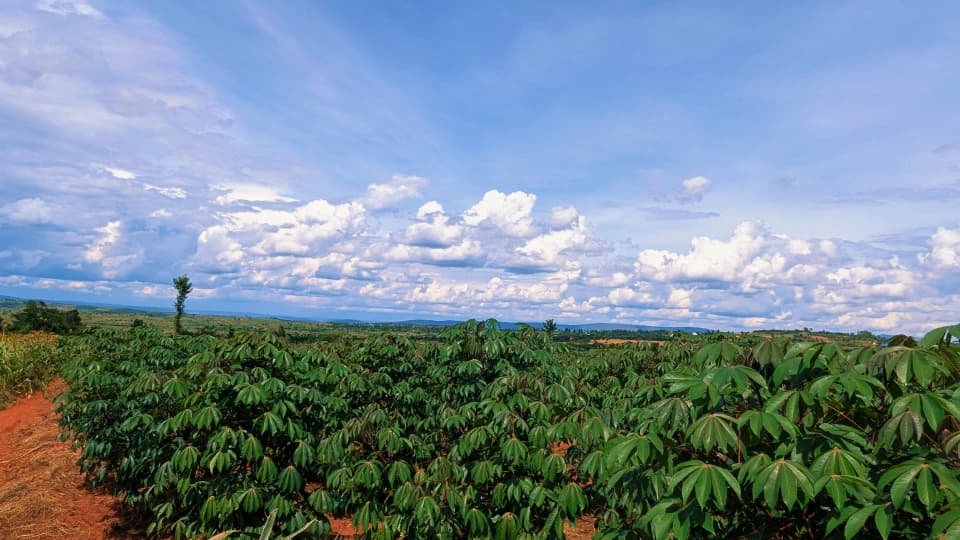
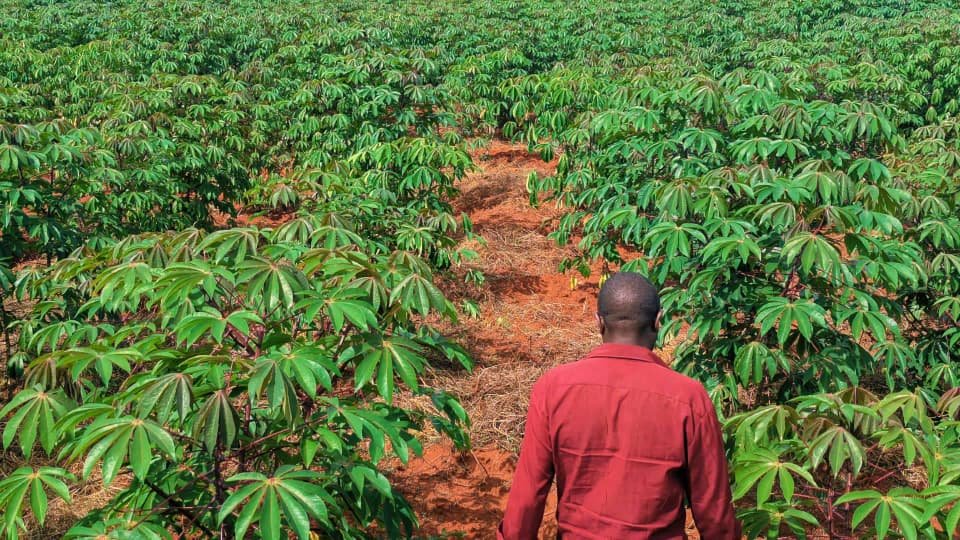
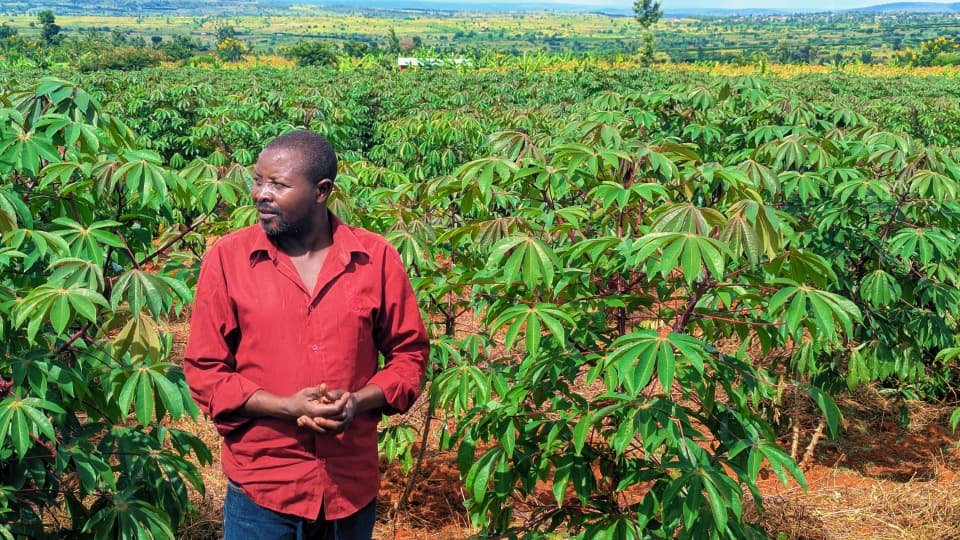
A cassava farmer in Ndego Sector, Kayonza District, says improved cassava seeds and modern farming support from the Kayonza Irrigation and Integrated Watershed Management Project Phase II (KIIWP 2) have transformed his life. Malidadi Jean de Dieu has seen his harvest increase from six tons per hectare to an expected 15 tons, helping him secure a Profitable supply contract with the Kinazi Cassava Plant.
From Traditional to Commercial Farming
Malidadi shared how new cassava varieties distributed through the Rwanda Agriculture and Animal Resources Development Board (RAB) under the KIIWP 2 project helped him move from traditional farming to commercial agriculture.
Malidadi explained that before receiving the improved seeds and training, he used traditional farming methods without fertilizer and produced very low yields.
“Before, I was harvesting around four to six tons per hectare because we were farming in the old way without fertilizer. We thought cassava did not need fertilizer. But after getting support and training from KWIIP 2 and RAB, the harvest changed completely,” he said.
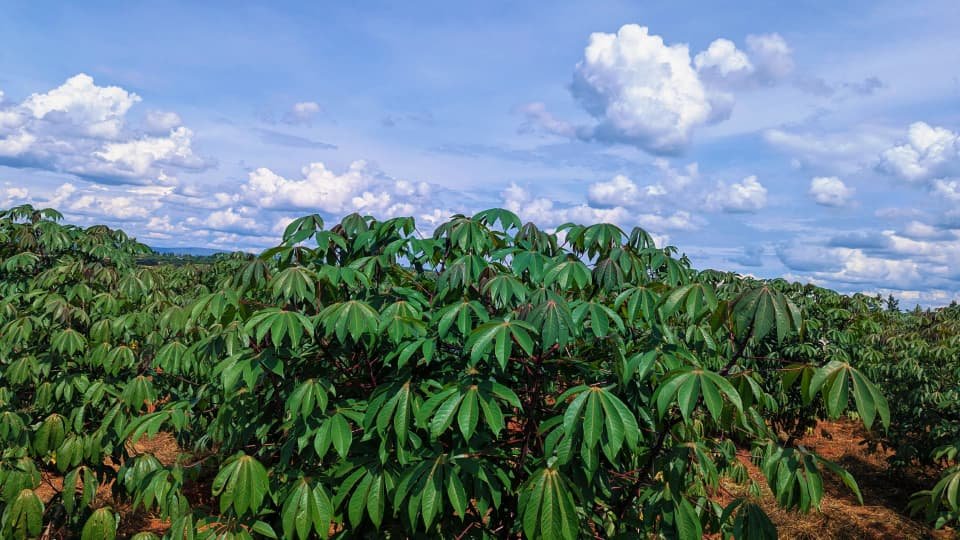
Today, he expects to harvest about 15 tons from one hectare, more than double what he used to produce.
Resilience Against Disease and Drought
The improved cassava varieties known as “Gikungu” and “Buryohe” were selected because they can survive the dry conditions common in Kayonza, an area often affected by drought. According to Malidadi, the new varieties are also resistant to mosaic disease, which had destroyed older cassava crops in the past.
“The old cassava variety was getting diseases, especially mosaic disease. But these new seeds are strong. When you look at the field, you cannot see signs of disease. That is why many farmers now want these seeds,” he explained.
A Direct Link to Market
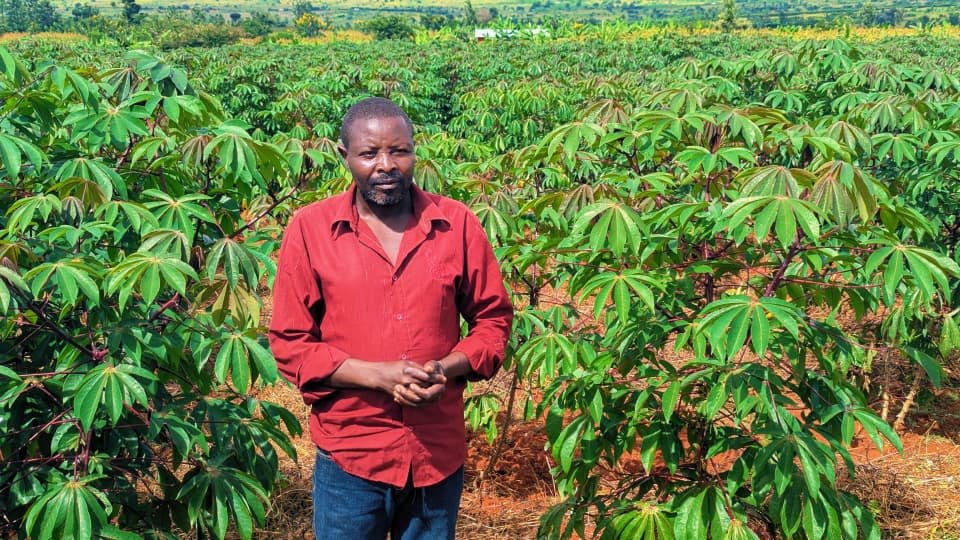
He believes the income from cassava can now comfortably support his family, including paying school fees for children studying at university.
“People say farming has no business, but I disagree. With this cassava farming, I believe I can earn between Rwf 4 million and Rwf 5 million in one year. That can pay school fees and support my family. With support from KWIIP 2, hunger that used to affect this area is becoming history.” he added.
Malidadi said cassava farming has also created jobs for people in his community because he hires workers to help in his fields.
One of the biggest changes came from learning modern farming techniques. He explained that KWIIP 2 and RAB trained farmers on spacing, fertilizer use, and seed multiplication.
He said that one cassava plant bundle can now produce between 50 and 70 kilograms under improved farming practices.
“Before, one plant bundle could give us maybe 10 kilograms. But now, with good spacing, fertilizer, and improved seeds, one cassava plant can produce between 50 and 70 kilograms,” he said.
Beyond the Roots: The Seed Business
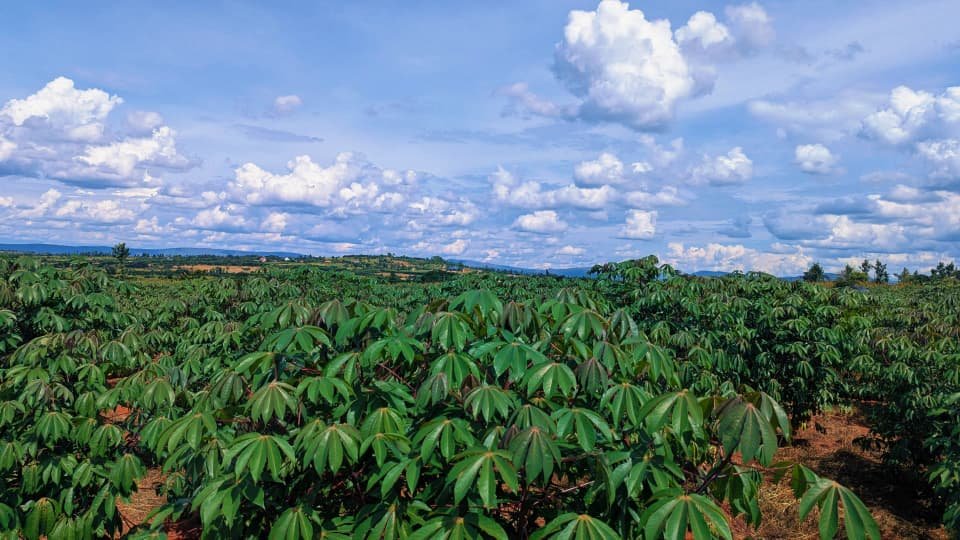
The farmer also earns money by selling cassava stems used as seeds. He explained that certified cassava stems can sometimes bring even more income than the roots themselves.
“The seed business is very profitable. We sold cassava stems from one hectare for about Rwf1.5 million. Then we also sold the cassava roots after harvesting,” he said.
A Regional Transformation
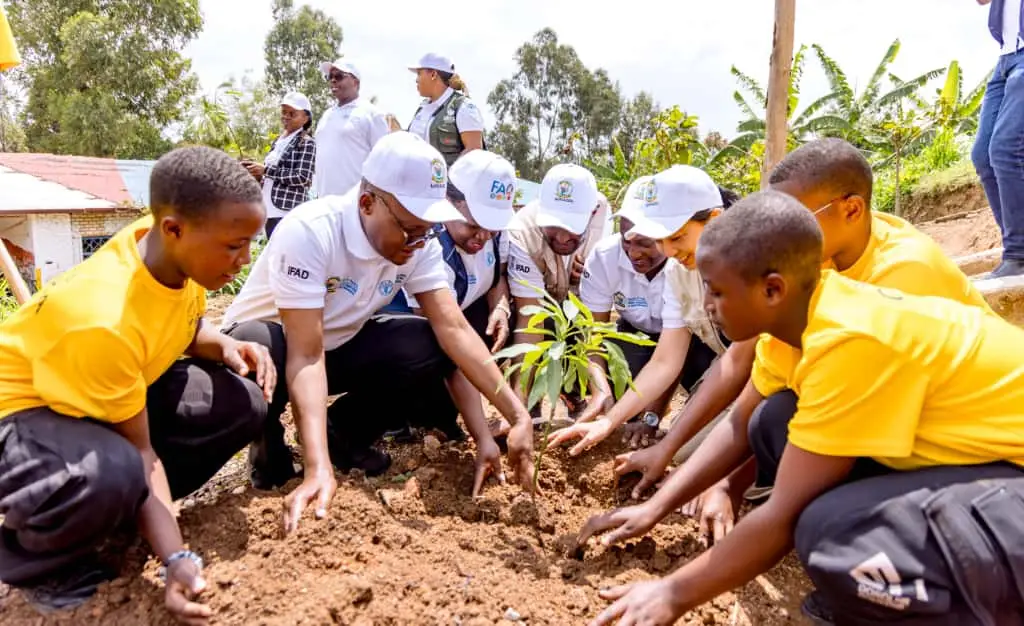
According to project officials, the success seen in Malidadi’s field is part of a wider agricultural transformation happening in Kayonza through the KWIIP 2 project, which is supported by the Government of Rwanda in partnership with International Fund for Agricultural Development (IFAD), the project is managed by the Ministry of Agriculture and Animal Resources through the Rwanda Agriculture and Animal Resources Development Board RAB.
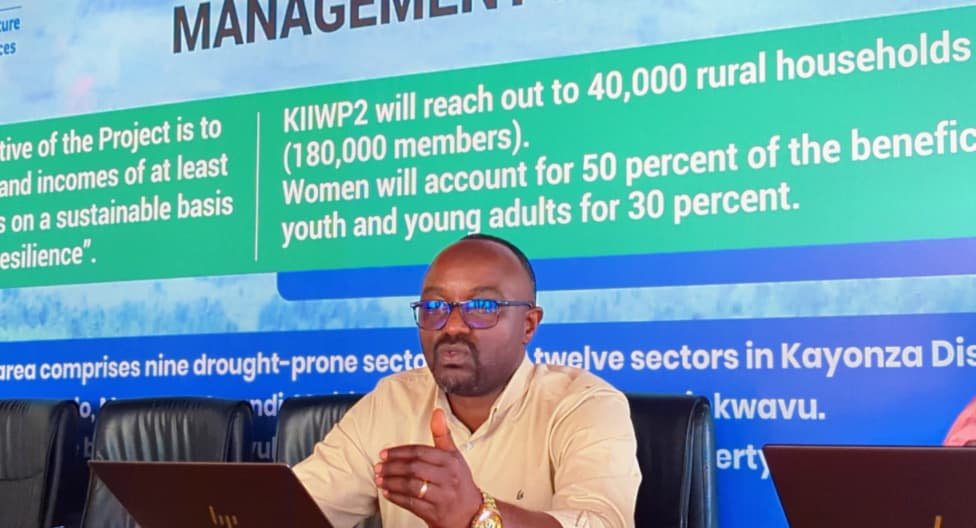
Faida Olivier Monitoring and Evaluation Specialist for KIIWP 2 said the project started in 2020 and focuses on fighting soil erosion, improving irrigation, and helping farmers access better seeds and markets.
The project has already protected more than 2,000 hectares against soil erosion and is working toward irrigating nearly 5,000 hectares in Kayonza.
Officials say they are also training farmers through Farmer Field Schools and helping cooperatives multiply improved seeds.
Sibomana Jean Claude an Agricultural Extension Specialist said the project first tested different crop varieties to identify seeds that can survive the harsh climate in Kayonza.
“We tested different seed varieties with RAB to find crops that can survive drought and still produce high yields. Cassava became one of the strongest crops for this region,” he said.
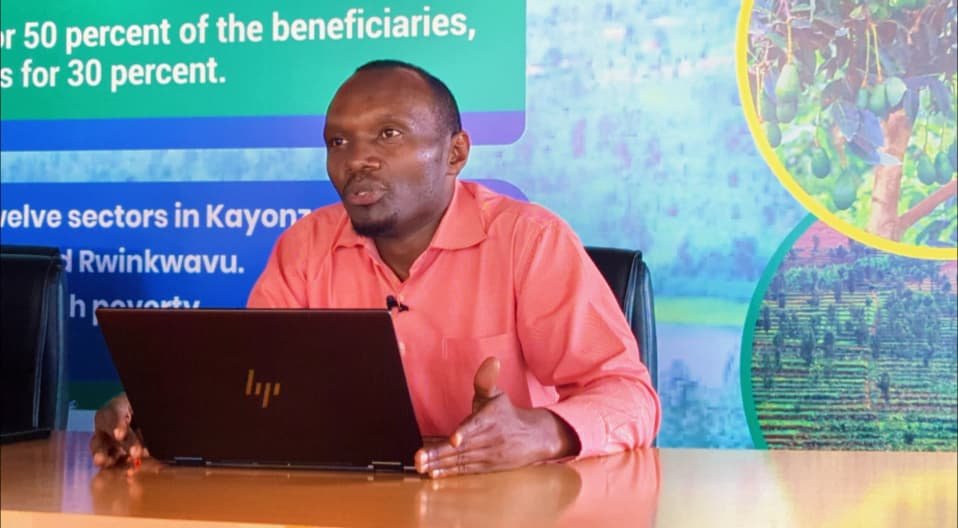
Jean Claude says The project has already distributed more than 2.5 million cassava cuttings to farmers, enough to plant more than 540 hectares. More than 14,700 farmers have also been trained in modern agriculture practices.
Jean Claude said many farmers who once struggled with hunger are now producing enough food for both home consumption and the market.
“Farmers in this area used to face serious drought and low harvests. But today many families can feed themselves and even sell their produce,” he said.
For Malidadi, the results are already visible in his daily life and future plans. He now owns additional cassava fields and hopes to continue expanding production.
He is also encouraging young people and unemployed residents to see agriculture as a business opportunity instead of a last option.
“Even people without land can join farming through land-sharing agreements. Farming can change lives if people use modern methods and good seeds,” he concluded.