In Mayange Sector, located in Bugesera District, Rwanda, access to safe water and clean sanitation used to be a major problem for many families. People struggled daily to find water, and this affected health, education, and overall community life. Children often walked long distances to fetch water, and diseases caused by unsafe water were common.
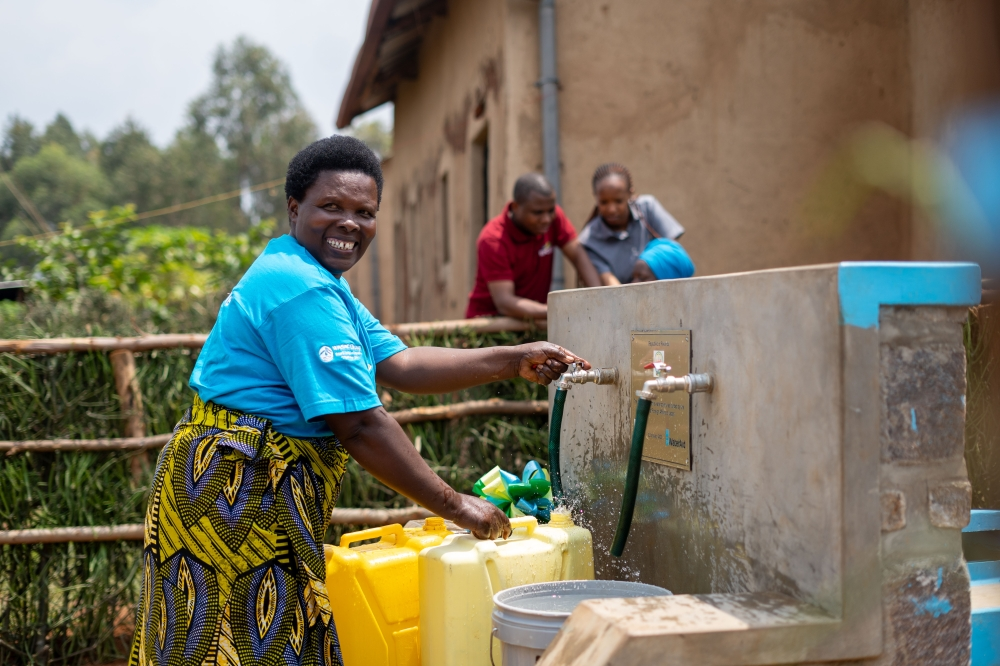
Today, things have changed after a project supported by WaterAid Rwanda improved water supply, sanitation, and hygiene services across the area.
Life before the project
Before the project, residents say life was very difficult. Water was not close to homes, and sometimes it was not available at all.
Umwamahoro Clemance One community member in Mayange sector explained the struggle, saying: “Getting water was difficult for us, we had to walk long distances, which took a lot of time and energy every day. Children were arriving late at school because of fetching water education was also affected, as many students missed morning lessons or arrived tired.” She said
Water availability was also unreliable. At times, water sources would dry up completely or disappear for long periods. Habineza Jean Claude other resident described:“We would lack water for a long time. This made our daily life even harder, especially during dry seasons. Because of these challenges, hygiene was poor, and many families used unsafe water sources, increasing the risk of illness.” He said
The WaterAid Rwanda project
To solve these problems, WaterAid Rwanda introduced a project to bring safe water closer to the community. The project focused on building water supply systems, extending pipes, and installing taps in villages and homes.
The project also helped families install home taps and improve sanitation facilities such as toilets. This made clean water available directly in homes and reduced the need to depend on distant water points.
Another important part of the project was hygiene and sanitation training. Community members were taught how to keep their homes clean, how to use safe water containers, and how to build proper toilets.
Improved sanitation and hygiene
People in the community also received support to improve toilets and hygiene practices at home. Before the project, many families used unsafe and poorly constructed toilets.
Umwamahoro Clemance described the situation: “The toilet was made of wood and had no door. this made it unsafe and unhygienic. After the project, we were able to build better toilets with doors and proper structures, improving privacy and cleanliness.”
Theoneste Dufitinema Another community member explained how habits changed after training: “We learned how to keep our homes clean. People also started cleaning regularly and teaching children good hygiene practices.”
Impact on daily life
The project has brought major improvements to daily life in Mayange Sector. Clean water is now closer to homes, saving time and reducing stress.
Habineza Jean Claude said: “Now water is near us This change has made a big difference for our families.Children are also benefiting. With water nearby, they no longer spend hours fetching it in the morning. Children go to school on time now.” He said
Women and children, who were mostly responsible for collecting water before, now have more time for other activities such as education, farming, and household work.
Community development and reach
According to project information, more than 7,500 people across ten villages now have access to improved safe water systems. Schools and a local health facility are also benefiting from the clean water supply.
In addition, over 10,000 people have received hygiene and sanitation education through training programs and community awareness activities. Water user committees were also trained to help manage and maintain the water systems.
TCN || The Comments News