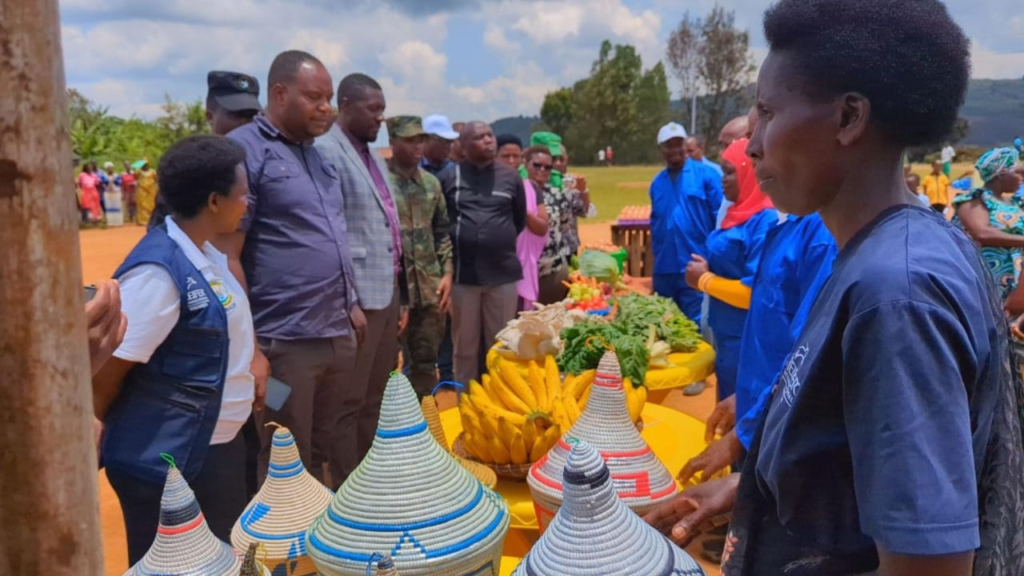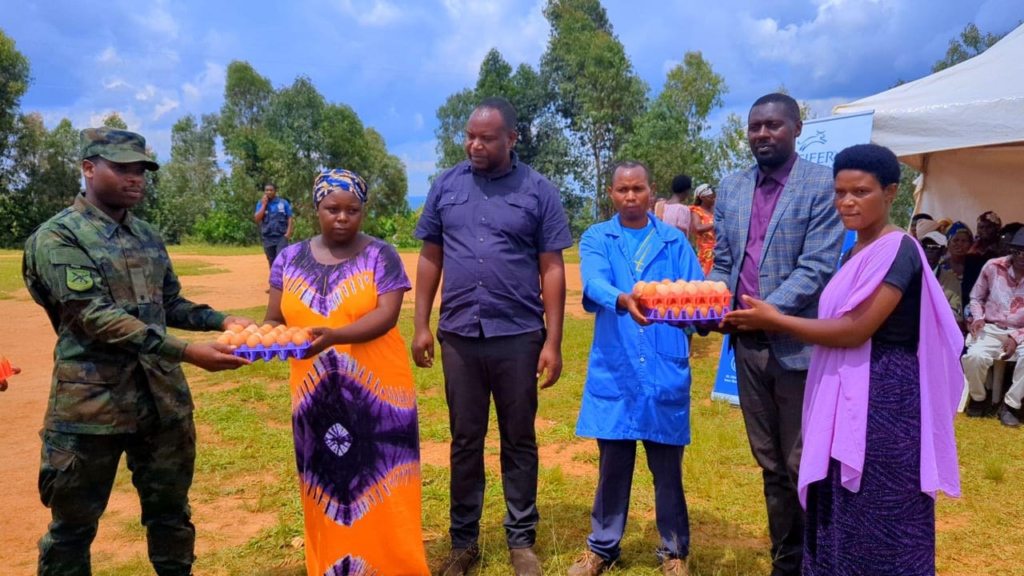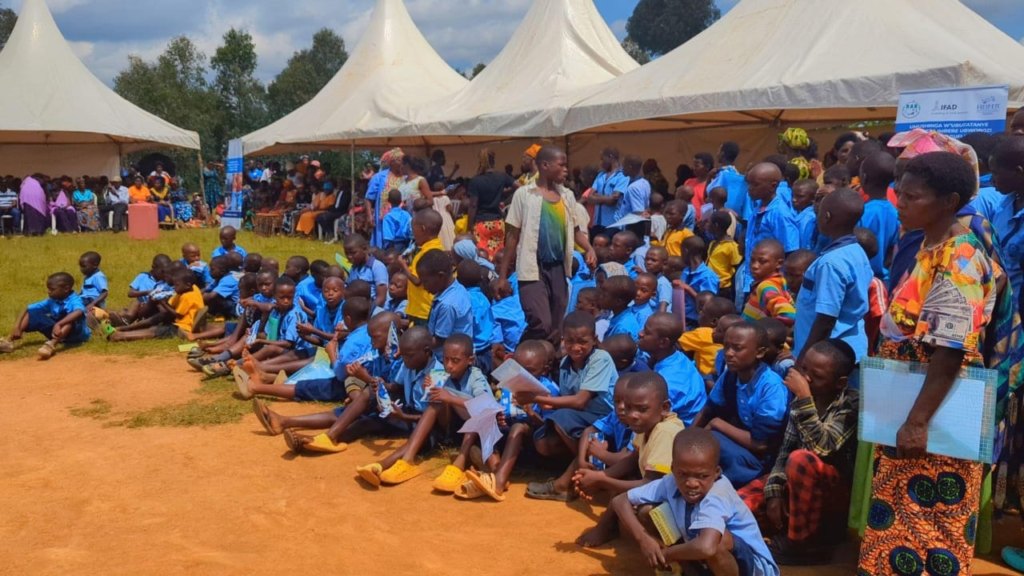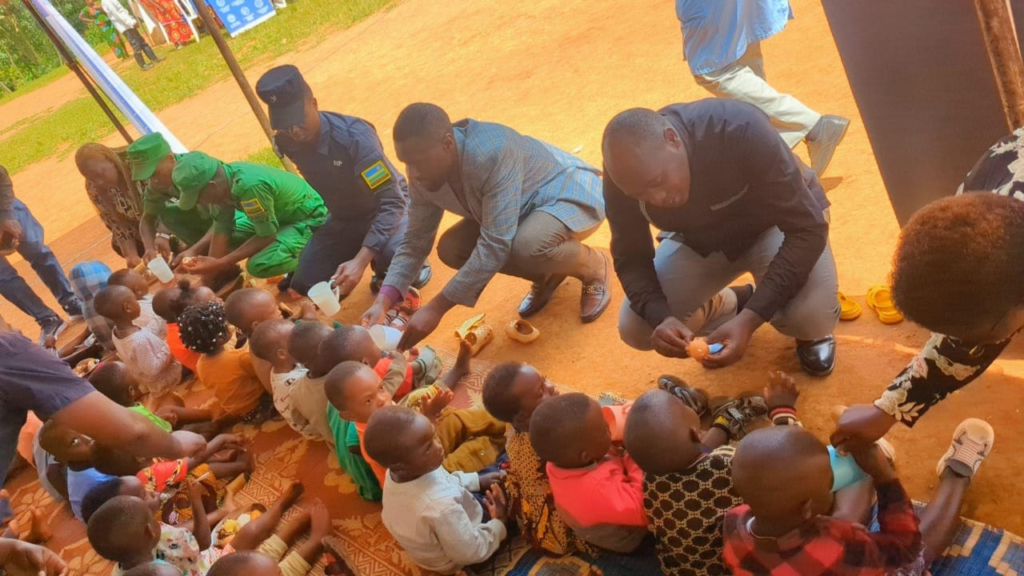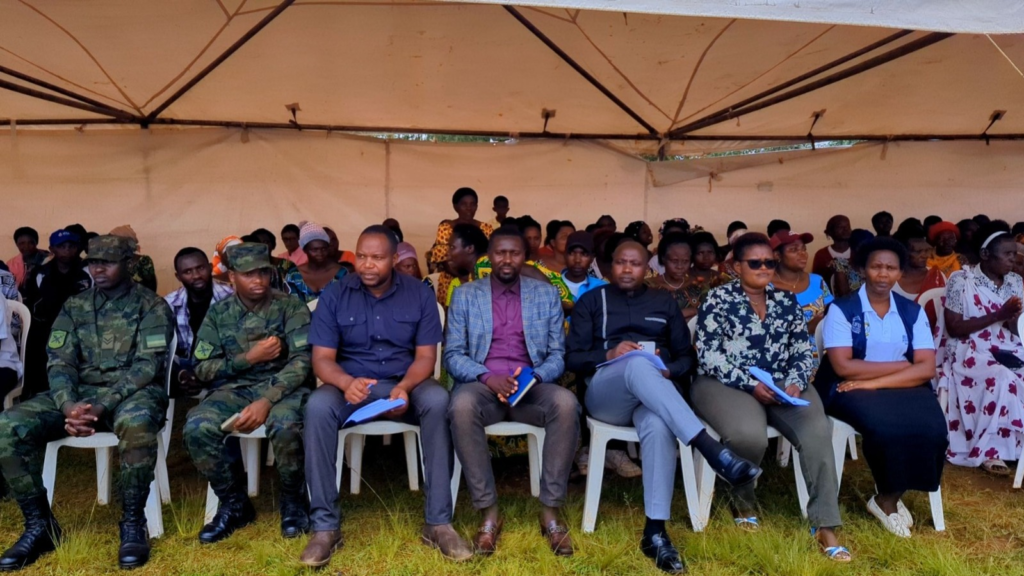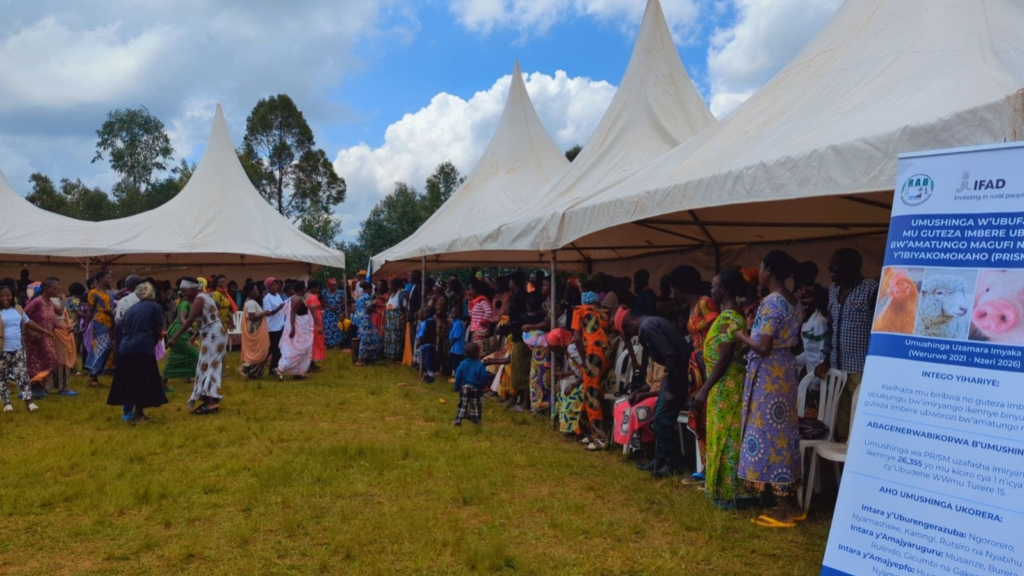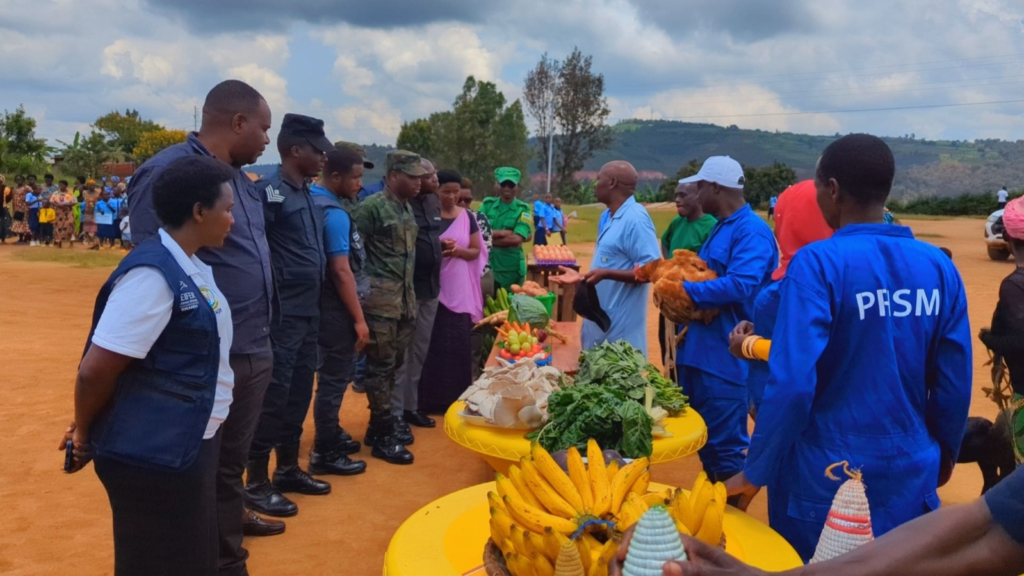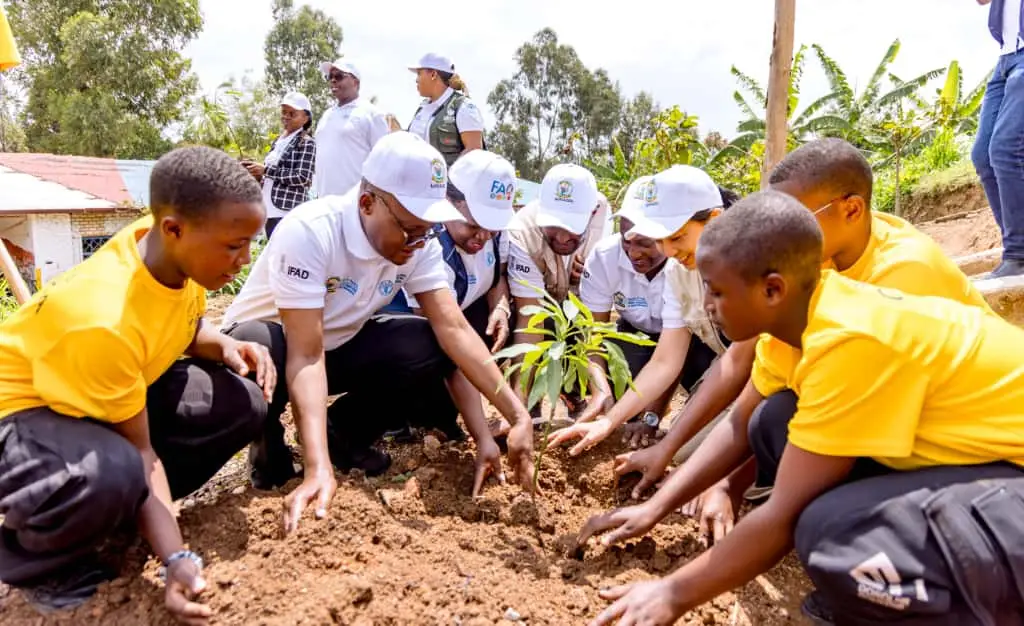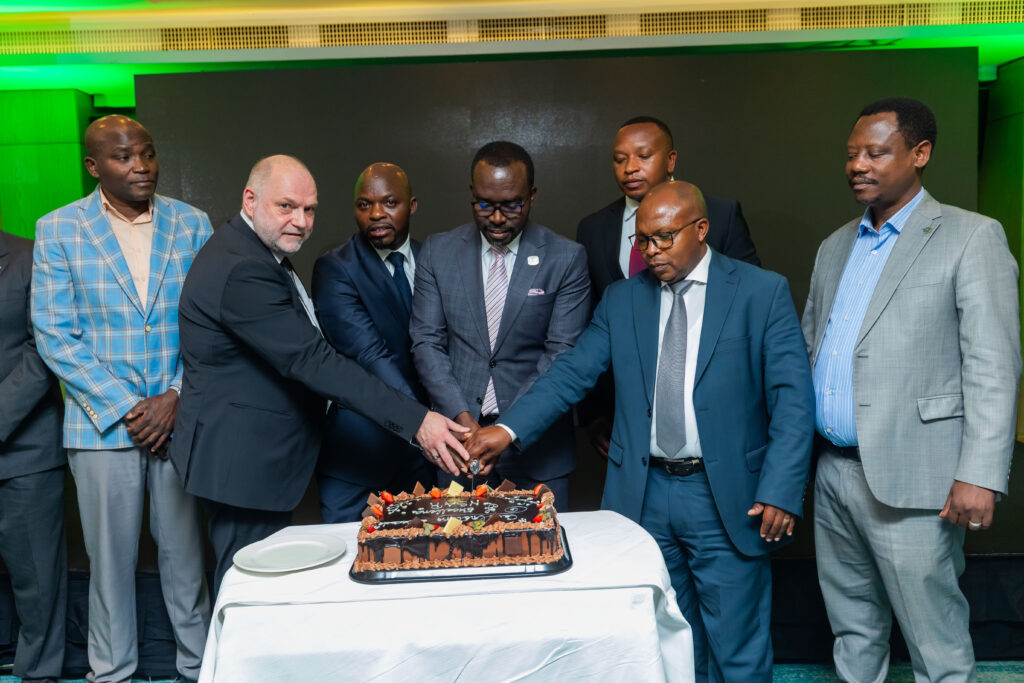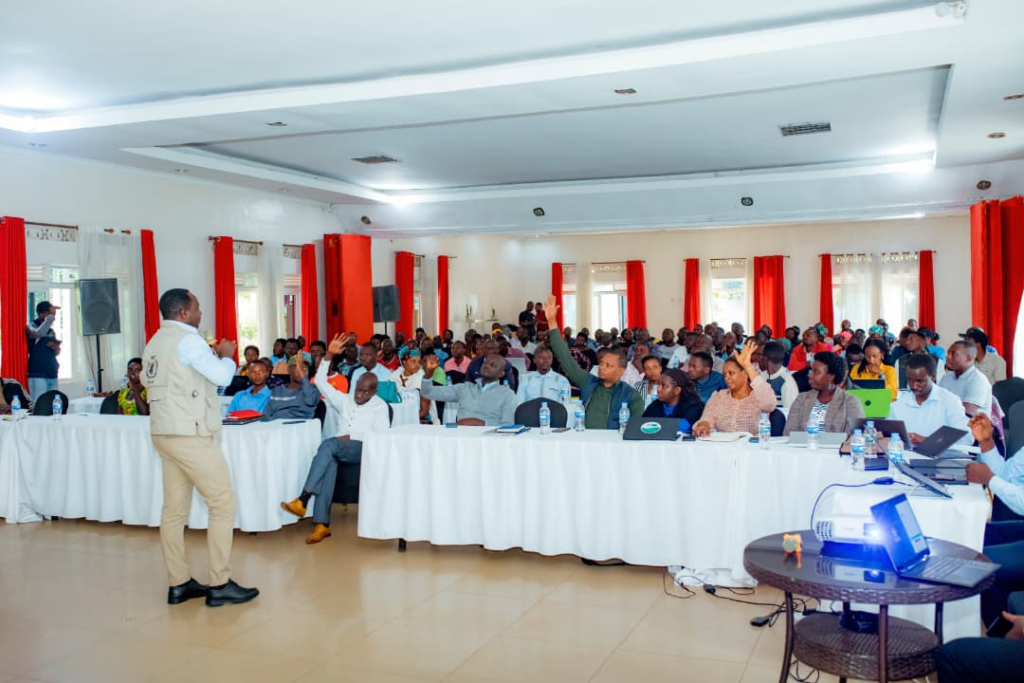
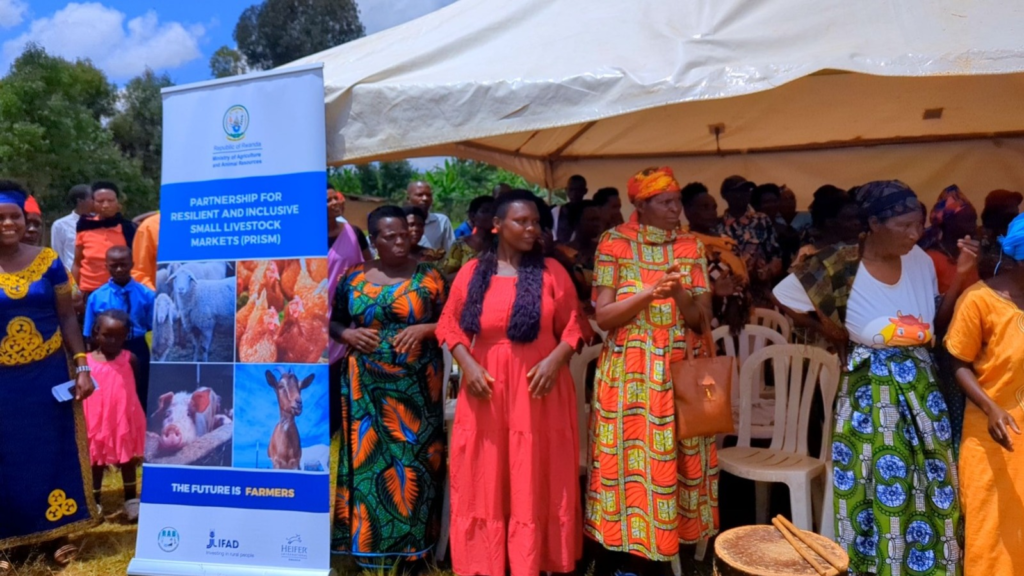
On 02 march 2026 In Murambi Sector, Rulindo District, community members, local leaders, and development partners gathered for awareness campaign encouraging families to eat more animal-source foods to fight malnutrition.
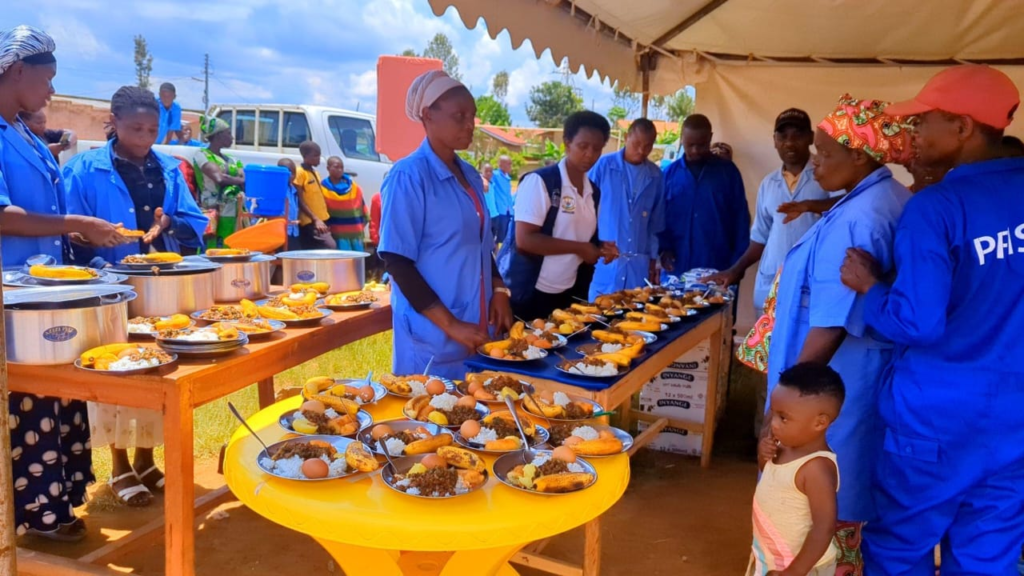
Organized by the Rwanda Agriculture and Animal Resources Development Board (RAB) under the PRISM programme (Partnership for Resilient and Inclusive Small Livestock Markets) the campaign is implemented in partnership with The International Fund for Agricultural Development (IFAD), Enabel Belgium, Heifer International, and VSF Belgium. the PRISM programme, is not only about food it is about changing mindsets, improving health, and building stronger rural families.
Speaking at the event, Niyitegeka Philipo, Head of Health Department in Rulindo District, said that although progress has been made, malnutrition remains a concern.
“In Rulindo, stunting is still around 27%. It has reduced slightly from about 29% in the past five years. This gives us hope, but we still have a long way to go,” he said.
He stressed that the goal is to reduce stunting to at least 15%.
“We believe that with strong efforts and support from partners like PRISM, we can reach our target. But we must continue working together.” He said
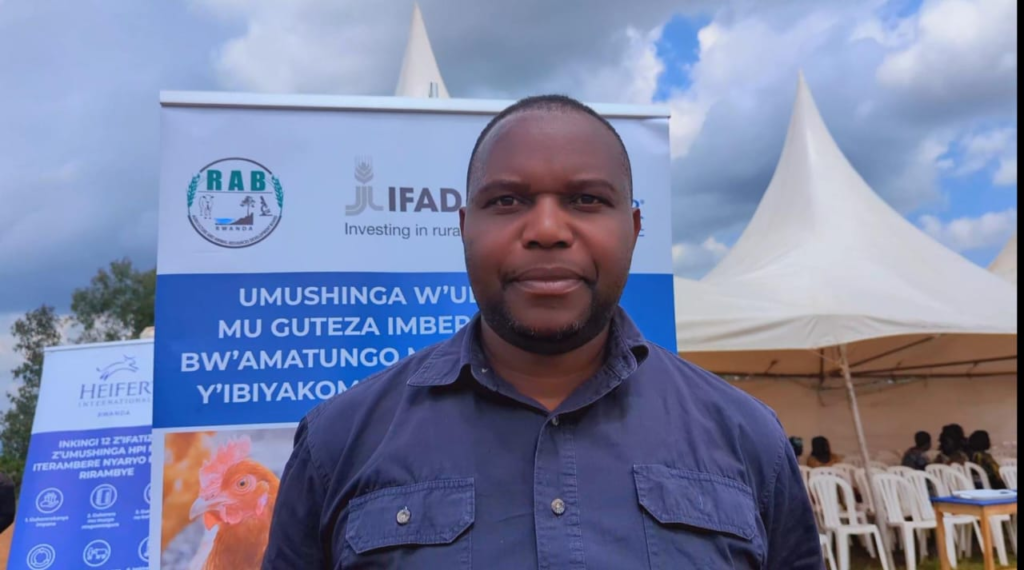
Niyitegeka warned about a common problem in communities selling nutritious food instead of consuming it at home.
“Some parents sell eggs and milk while their children need them most. This must change. We must first feed our children because they are the future of Rwanda,” he said.
He called on families to protect and properly use what they receive from development programmes.
“Use what you have wisely. Do not waste it. Work together in groups so that even when projects end, your progress continues.” He added
A farmer’s story: from struggle to success
For many families, the impact of PRISM is life-changing.
Neretse Sulaimani, a farmer from Murambi Sector,Mugambazi Cell, said his life improved after receiving just 10 chickens.
“Before, I had no knowledge and no training. I was just a farmer trying to survive, PRISM gave me 10 chickens, but they changed my whole life I raised them and now they have increased . I started getting eggs for my children, improved our nutrition, and even used the manure to grow vegetables. Today, my family eats better and lives better. I am very thankful to PRISM for this support.” he said
Today, his situation is different.
“Now my children eat eggs regularly. We grow vegetables, and we have a balanced diet. Malnutrition is no longer a problem in my home.”
He also benefited from training and kitchen gardening support.
“We planted carrots, spinach, and other vegetables. This helped us improve our nutrition.”
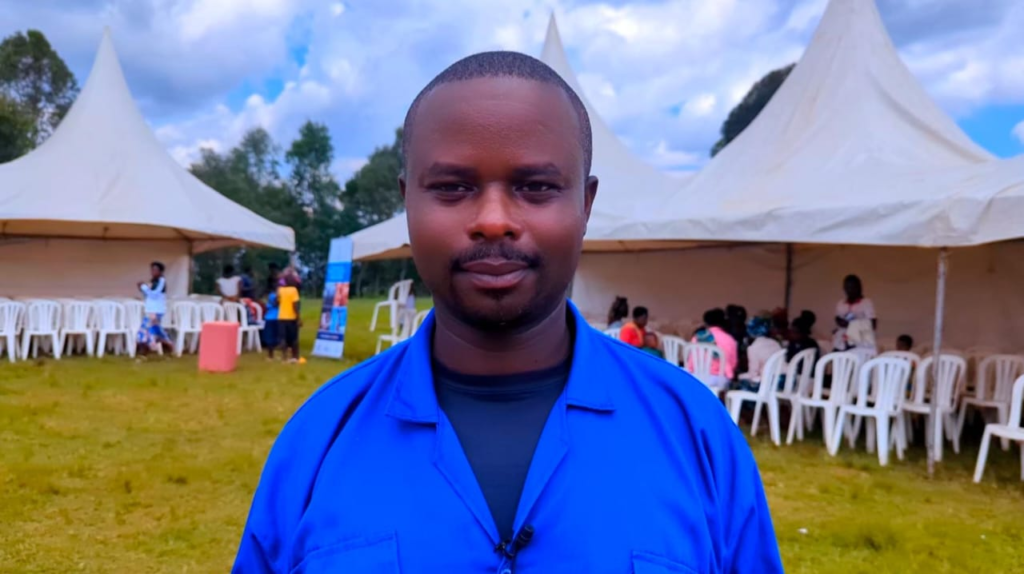
Sulaimani strongly warned against selling all farm products.
“It is not good to sell everything. It is not even a good culture. We must first eat what we produce, then sell the rest,” he said.
He explained how PRISM training changed their mindset:
“We learned not to finish our livestock or sell everything. We sell carefully and reinvest to grow again.”
From chickens to business success
Another beneficiary, Murekatete Nadia, shared how PRISM transform her life.
She started with just 10 chickens from the PRISM programme.
“I was very poor before. But after training and support, I started raising chickens and selling eggs, through the chickens I got from PRISM, my family now has eggs to eat and better nutrition. My children are healthier, and we no longer struggle with malnutrition. These chickens brought real change to our home” she said.
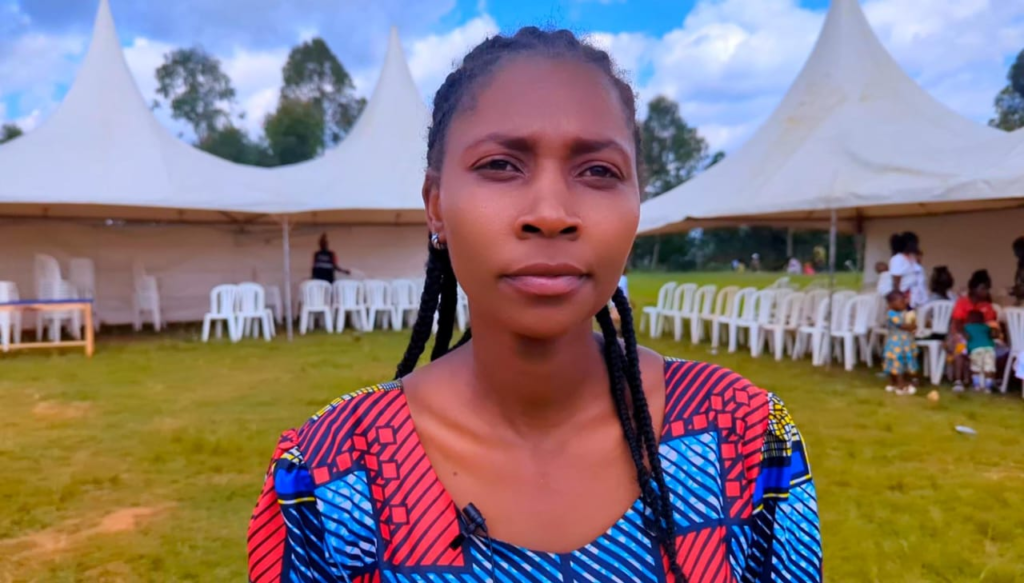
She later expanded her activities step by step.
“I sold some chickens, saved money, and started a small business. Today I own a salon and employ two people, Now I have pigs, chickens, and a business. My life has completely changed.” she said proudly.
“We give animals, but also knowledge”
Dufatanye Venuste, PRISM Coordinator in Rulindo, Gakenke, and Burera, said the project goes beyond livestock distribution.
“Through the PRISM programme, we are not only giving livestock like goats, pigs, and chickens, but also building knowledge and changing mindsets. Giving animals alone is not enough if families do not understand their nutritional value. That is why we conduct awareness campaigns to promote foods like eggs, milk, and meat as essential for a balanced diet, especially for children,” he said.
He noted that behavior change remains a key focus:
“Some farmers still sell everything they produce without thinking about their family’s nutrition. Our message is: feed your household first, improve your children’s health, and then sell the surplus.”
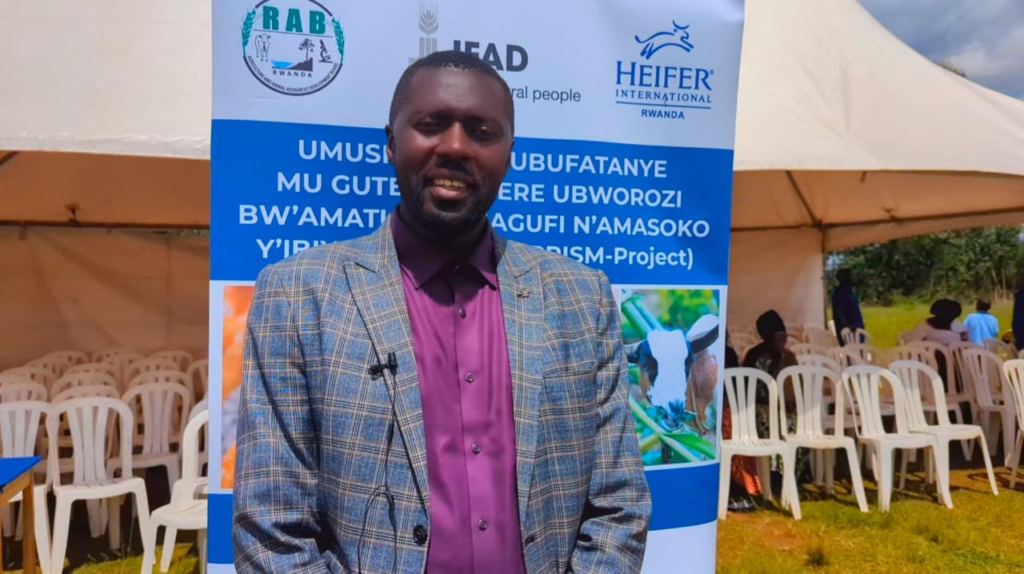
He added that the programme supports communities through training, Pass on The Gift systems, and kitchen gardens:
“These efforts are helping reduce malnutrition and improve livelihoods. Our goal is to build strong, self-reliant communities that can continue progressing even after the project ends. we want farmers to continue working together in groups, sharing knowledge, and supporting each other. That is how we will sustainably fight malnutrition and poverty in rural areas.”
Building a stronger future
The campaign in Rulindo is part of a wider national effort to: Increase consumption of animal-source foods, improve child nutrition, strengthen local markets, Reduce poverty in rural areas.
PRISM: From livestock to better lives
The PRISM programme has been working in Rulindo since 2022, supporting 2,262 farmers across sectors like Murambi, Bushoki, Kisaro, Burega, and Cyungo.
According to project data:
- 418 households have bought land
- 730 families increased livestock ownership
- 749 households bought chickens, 335 bought pigs
- 113 families built new houses and 288 improved their homes
- 1,455 households paid for health insurance (Mutuelle)
- 1,149 families paid school fees for their children
The project is implemented by The Ministry of Agriculture and Animal resources through RAB-SPIU with partners including Heifer International, and funded by IFAD and ENABEL.
Through cooking demonstrations, nutrition education, and community mobilization, the campaign message from officials is “Eat what you produce. Feed your family first. Build a healthier future.”