HIV prevention remains a key public health priority in Rwanda, especially among young people, refugees, women, people with disabilities (PWDs), and other vulnerable groups. While Rwanda has made significant progress in improving access to health services, including HIV treatment and maternal care, new infections are still more common among youth.
According to the Seventh Rwanda Demographic and Health Survey (RDHS7) conducted in 2025, maternal health indicators have improved, with women attending at least four antenatal care (ANC) visits increasing from 47% in 2020 to 78% in 2025. Health experts say these improvements show that, with proper information, treatment adherence, and community support, people affected by HIV can live healthy and productive lives.

After the successful of the first HIV prevention campaign held in June 2025, RRP+ (Rwanda Network of People Living with HIV), in collaboration with RBC, UPHLS, Interfaith Rwanda, Rwanda Emergency, Save the Children International (SCI), Alight Rwanda, Refugees Rwanda, and other partners, has launched a second HIV prevention campaign in Mahama Refugee Camp and the surrounding community.
The campaign, held on 23 December 2025 in Mahama Sector, Kirehe District, focused on increasing HIV awareness, promoting voluntary testing, fighting stigma, and improving access to prevention services using an innovative “Playing for Prevention” strategy.
Sports as a Tool for Prevention and Inclusion
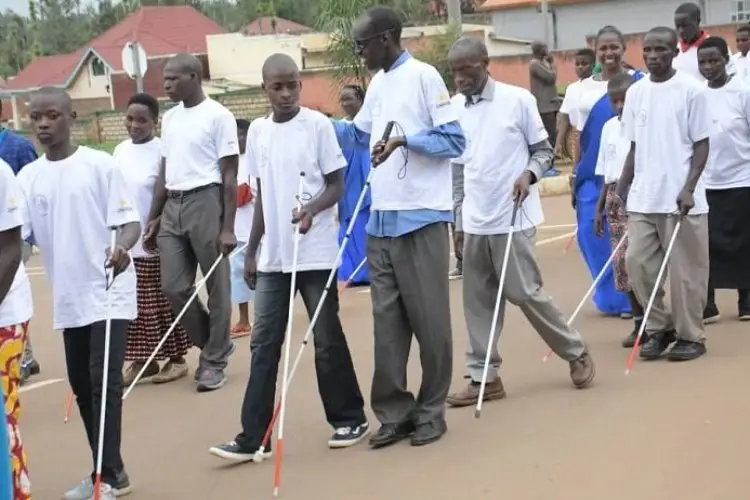
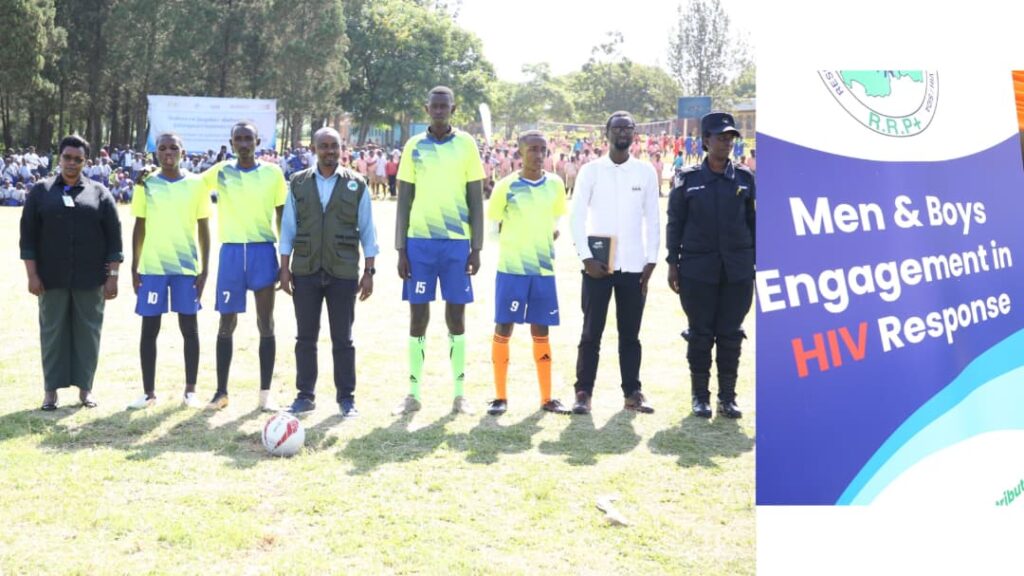
The campaign used sports activities, community testimonies, HIV testing, and condom distribution to engage the community in a friendly and inclusive way. Football matches ⚽ and sitting volleyball games involving people with disabilities ♿ were organized to pass strong messages on HIV prevention, unity, and inclusion.
The sitting volleyball activity sent a message that HIV prevention programs must be accessible to everyone, including people with disabilities. Community leaders emphasized that inclusion strengthens the HIV response and ensures that no one is excluded from life-saving information and services.

Through football matches, youth and community members engaged in open conversations about HIV prevention, community unity, and respect for each other, helping to reduce stigma and fear around HIV testing.
Leadership Speaks on HIV Awareness
Speaking during the campaign, Dr. Deo Mutambuka, Executive Director of RRP+, said the three day activity aimed to remind communities that HIV still exists and has no cure or vaccine.
“We are here to give people correct and reliable information. Mahama Refugee Camp has a large number of young people, and we know that new HIV infections are more common among youth. This means they are at higher risk and need accurate information on prevention and what to do in case of exposure,” he said.

Dr. Mutambuka added that the campaign also addressed gender-based violence (GBV) and encouraged early reporting to health facilities.
“We are reminding parents to protect their children and encouraging survivors of violence to seek medical care on time, so that the risk of HIV infection can be reduced,” he added.
Peer Educators and Community Outreach
As part of the campaign’s long-term impact, peer educators were introduced to support continuous awareness within the camp.
“We have trained peer educators who will move from household to household to educate families, fight stigma, and link people to health services. We also distributed condoms and reminded the community where they can access services,” Dr. Deo explained.

Voices from Camp Leadership
Mbogo Alex, a leader of sitting volleyball games in Mahama Refugee Camp, praised the ongoing efforts to fight HIV.
“I arrived in Mahama Camp in 2015, and since then, the fight against HIV has continued. Different organizations have educated youth, adults, and children. Today, we are seeing positive results, especially among young people,” he said.
He highlighted the role of free condom kiosks placed across villages in the camp.
“Condoms are easily accessible, and they are being used. This has helped young people protect themselves,” he added.
Community Members Share Their Experience
Residents said the campaign helped them better understand HIV transmission and prevention.
Ntahondereye Beatrice, a resident of Mahama Camp, said regular awareness sessions have changed her behavior.
“We are taught how HIV spreads and how to protect ourselves. I go for HIV testing regularly, and I also teach my children that sharing sharp objects like razor blades can transmit HIV,” she said.
Health Workers Confirm Positive Results
Health professionals working in the camp say the prevention efforts are paying off.
Dr. Habarugira Inyange Charlene, a medical doctor working at Alight-supported health services in Mahama Camp, said HIV infections have significantly reduced.
“HIV is still present, even though it has reduced. Prevention requires continuous reminders. The good news is that people in this camp actively go for HIV testing, and we have not recorded new infections in the past five years,” she said.

She added that proper treatment adherence has helped people living with HIV live normal lives.
“HIV is not spread through talking, shaking hands, or living together. When people take antiretroviral treatment correctly, the virus becomes suppressed, and they can live healthy lives,” she explained.
Health experts emphasized that improved ANC attendance, as shown in the RDHS7 2025, plays a critical role in preventing mother-to-child transmission of HIV.
Through the “Playing for Prevention” strategy, RRP+ believe that sports, inclusion, and active community participation are powerful tools to strengthen HIV prevention.By engaging youth, women, people with disabilities, and community leaders, the Mahama Refugee Camp campaign continues to raise awareness, protect dignity, and promote healthy living. The message is ”when communities are well-informed, included, and empowered, no one is left behind”


TCN || The Comments News