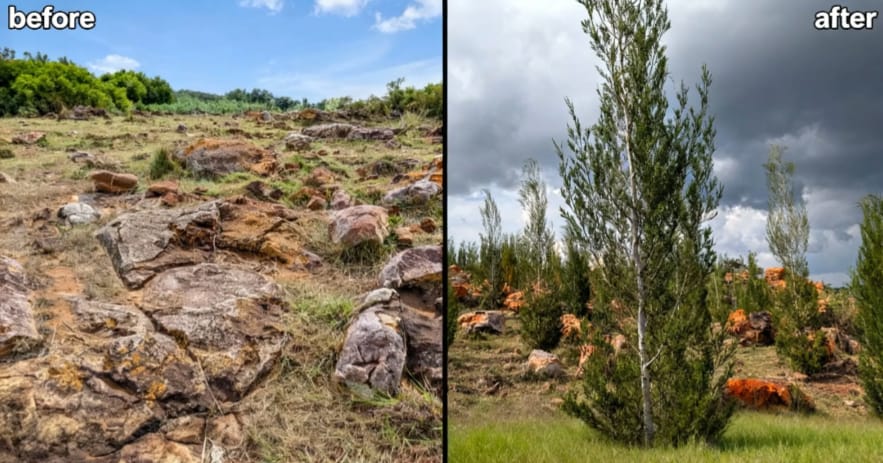
For many years, life was not easy for farmers in Nyagatare District, especially in Matimba and Musheri sectors. The area was heavily affected by climate change. Long dry seasons, strong sunshine, heavy rains, soil erosion, and destructive winds made farming very difficult.
Large areas of farmland were bare, without trees to protect the soil. During the rainy season, fertile soil was washed away and ended up in wetlands. When the sun became strong, crops dried up quickly because there was no shade, strong winds destroyed crops and even damaged houses. Many families lost harvests and income, making life harder every year.
It was during this difficult time that the National Adaptation Plan (NAP) Project was introduced to help communities adapt to climate change and restore degraded land.
🌳🤝🌽Agroforestry: saving the climate and growing food ✨
🌱 A New Beginning for Farmers
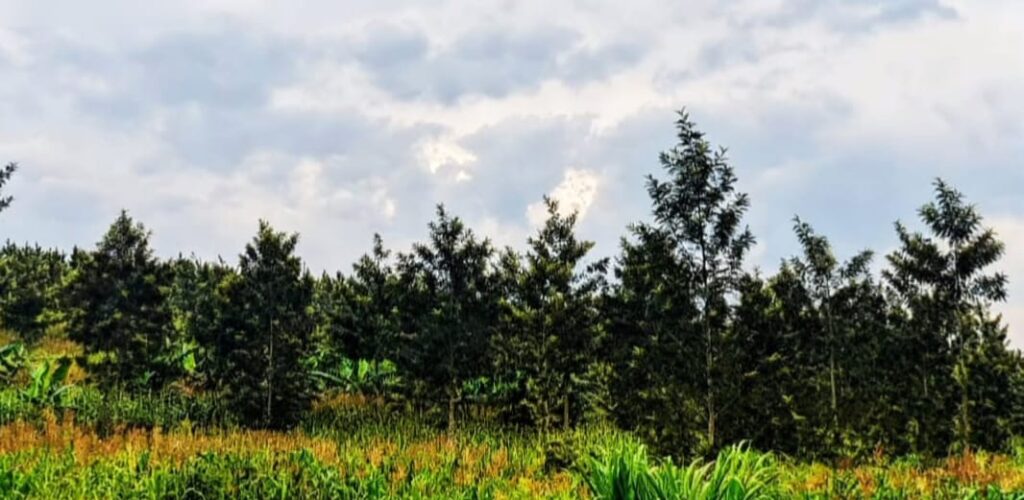
Today, residents in Nyagatare say their situation has changed. By mixing trees with crops through agroforestry, they believe they are “killing two birds with one stone.” Their land is protected, and at the same time, their harvests have increased.
The NAP Project is implemented by the Rwanda Environment Management Authority (REMA) and funded by the Global Environment Facility (GEF). At the national level, the project is supported with an investment of 6 million US dollars. In Nyagatare District, the project focuses on Matimba and Musheri sectors, where agroforestry has become a key solution to climate challenges.
Why Agroforestry Was Chosen
The NAP Project started in 2016 and is expected to continue until 2026. Its main goal is to strengthen climate resilience, restore degraded soils, expand forest cover, and increase farmers’ productivity.
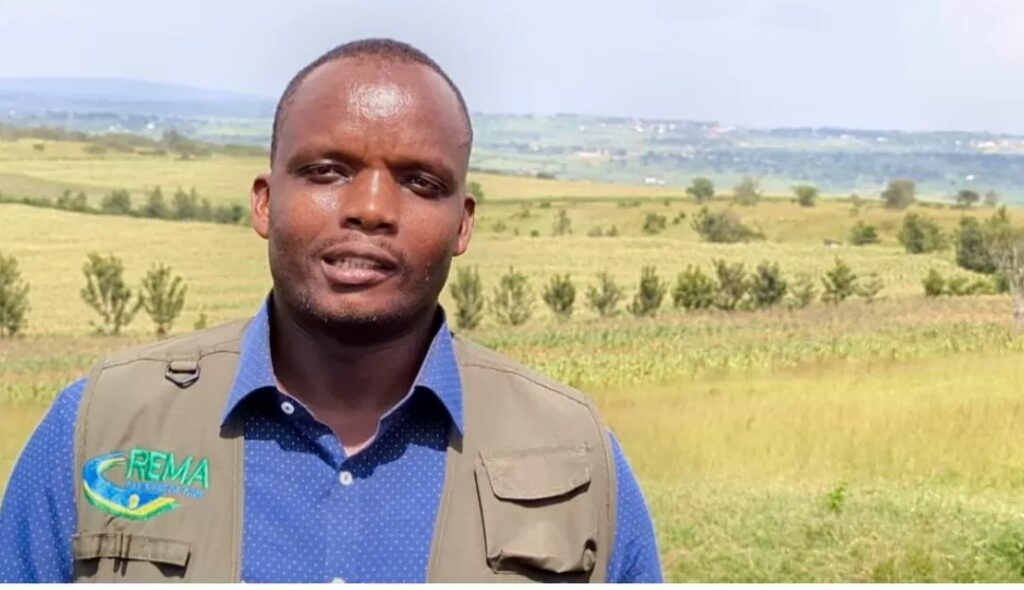
Explaining why agroforestry was introduced, Niyitegeka Servand, a representative of REMA under the NAP Project, said the decision was based on two major challenges faced by farmers.
“We wanted to protect the land from soil erosion caused by heavy rains, we also wanted to reduce the strong sunshine and frequent droughts that have always affected farmers in this area.” he said
Niyitegeka Servand, a representative of REMA under the NAP Project
Niyitegeka added that the benefits go beyond Nyagatare. “When you plant trees, you help your community and also help the world. Trees absorb carbon dioxide from the air, which helps reduce climate change globally,” he explained.
Clear Changes on the Ground
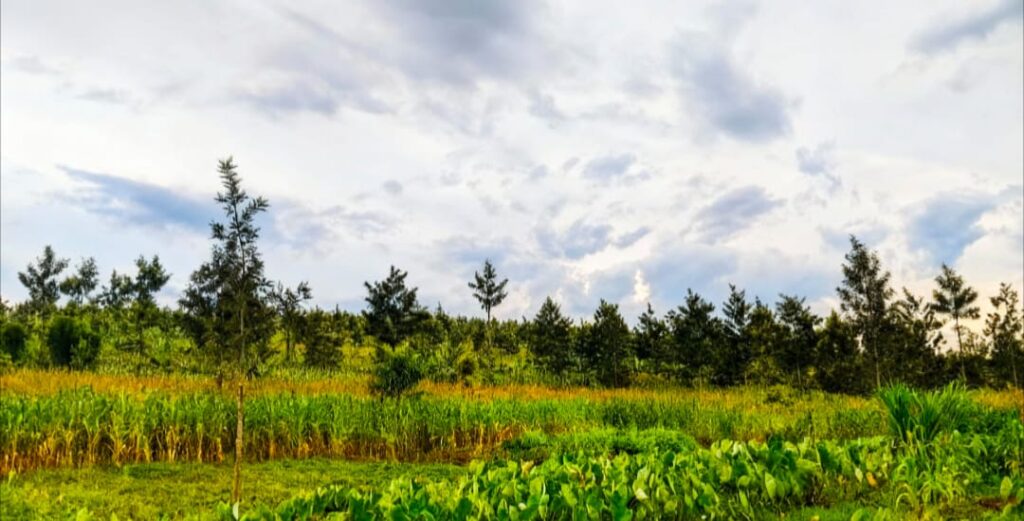
The impact of the project can be clearly seen across Matimba and Musheri sectors. Areas that were once bare and covered with red soil are now green. Trees planted among crops hold the soil together and prevent erosion. They also provide shade, which protects crops from extreme heat and helps keep moisture in the soil.
According to Niyitegeka, the project has also reduced the problem of strong winds. “Before, these areas suffered from destructive winds that damaged crops and houses, since the project started, there has been no reported case of strong wind hazards in Matimba and Musheri.” he said.
🗣️Farmers Share Their Stories
Residents say the changes have improved their daily lives.
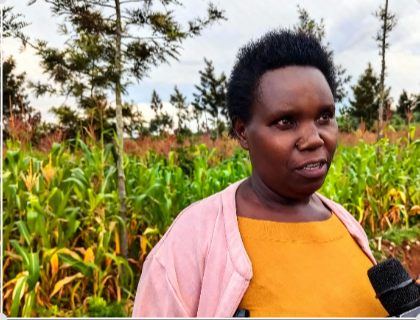
Mukansanga Leonile, from Musheri Sector, Musheri Cell, and Musheri Village, said farming is no longer a struggle. “Before this project, when it rained, soil erosion would carry away our land,when the sun came, our crops dried up because there was no shade, now the soil stays in place, crops grow well, and our farms remain productive” she said.
Mukansanga Leonile, from Musheri Sector
Mukansanga also talked about another benefit many families enjoy. “We no longer struggle to find firewood. We can easily get it from the trees planted in our farms, strong winds, which once damaged crops and houses, are no longer a threat.” she said.
The increase in harvests has been significant. “I used to harvest only one bag of maize, now I harvest three bags, I believe the harvest will continue to improve.” Mukansanga said
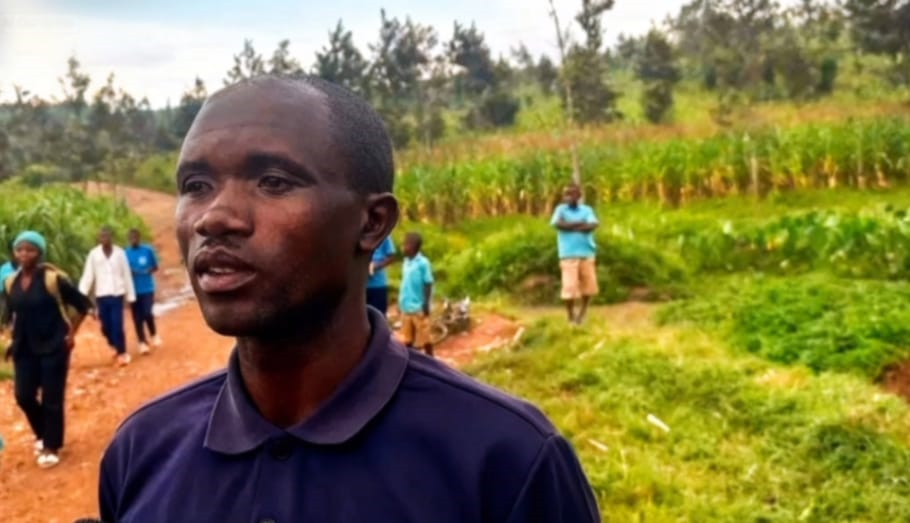
Another resident, Sekabanza Bernard from Musheri Sector, described the project as life-changing. He said the increased productivity from agroforestry has improved his family’s income.
“Because of the good harvests, I can now pay health insurance and school fees for my children without difficulty,” Bernard said.
Sekabanza Bernard from Musheri Sector
He encouraged other community members to take good care of the planted trees so that the benefits can continue.
More Than Farming
Beyond agriculture, the project has brought social and economic benefits. Local residents have earned income through tree planting and land preparation activities. Trees also provide firewood and supporting sticks for farming, which is important since not all households use gas for cooking.
Niyitegeka explained that agroforestry also improves the environment. “Trees help keep water in the soil, improve soil fertility, clean the air, and create a cooler environment for crops.” he said.
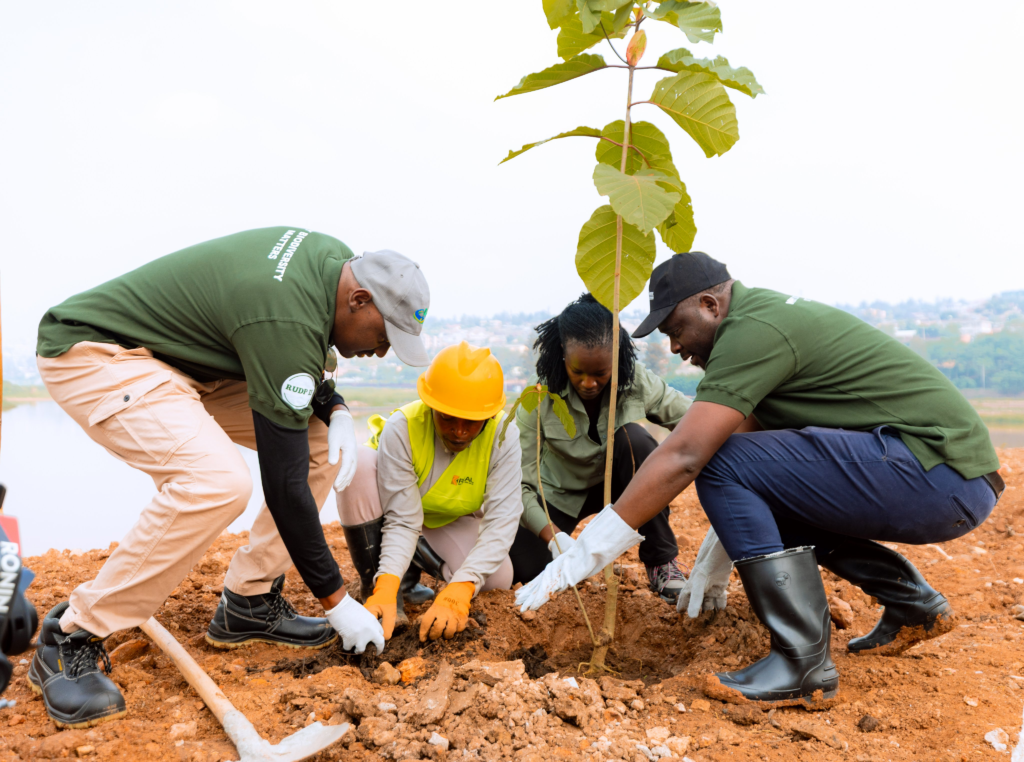
So far, more than 1,889 trees have been planted and mixed with crops in the project areas. These trees are expected to continue strengthening the ability of communities to cope with climate change.
What started as an effort to restore degraded land has grown into a solution that protects households from environmental risks, increases food production, and supports long-term development.
For residents, mixing trees with crops is no longer just farming it is a smart and lasting way to protect their land, improve their livelihoods, and secure a better future.
🌳🌽Trees and crops together protecting the land and boosting harvests! Two birds with one stone 🇷🇼✨